Designing your dream kitchen involves many decisions, but have you ever asked yourself this question… “Do I choose a kitchen island or breakfast bar?” Both are quite similar and can be a challenge due to space, lifestyle and design preferences, but both options offer valuable benefits.
We have put together a handy blog to help you decide between a kitchen island and a breakfast bar. We hope you can find all the information here.
Quick answer: kitchen island or breakfast bar?
Choose a kitchen island if you have the floor space to walk around all four sides, need extra storage, and want somewhere to prep, cook and gather. Choose a breakfast bar if space is tighter, you mainly want seating and casual dining, and you would rather not lose floor area to a freestanding unit. Islands cost more because they use more material and labour. A breakfast bar can be added to an island or a peninsula, so the two are not always an either-or decision.
What is a kitchen island?
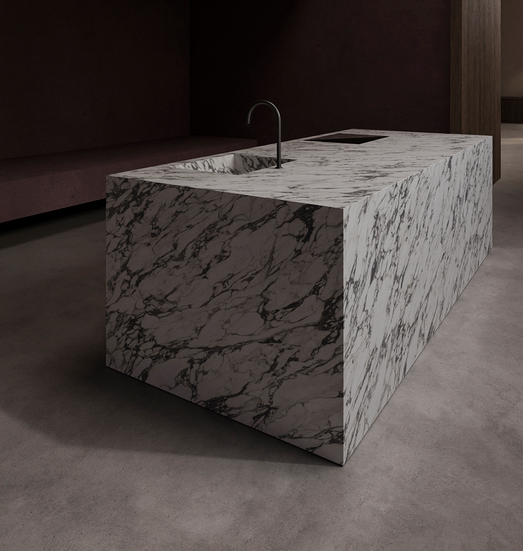
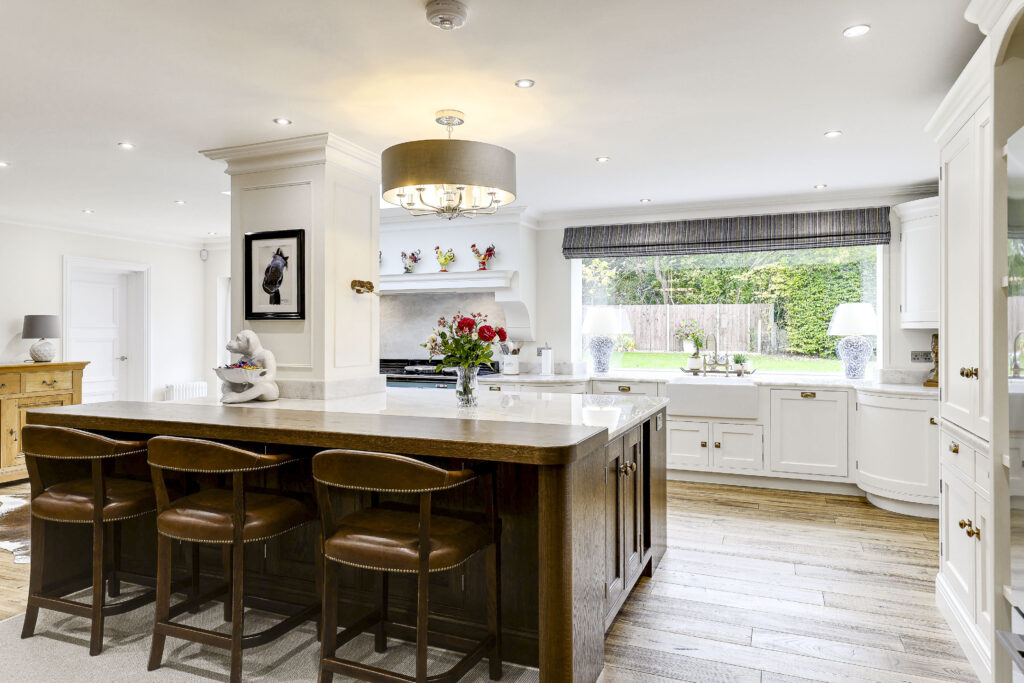
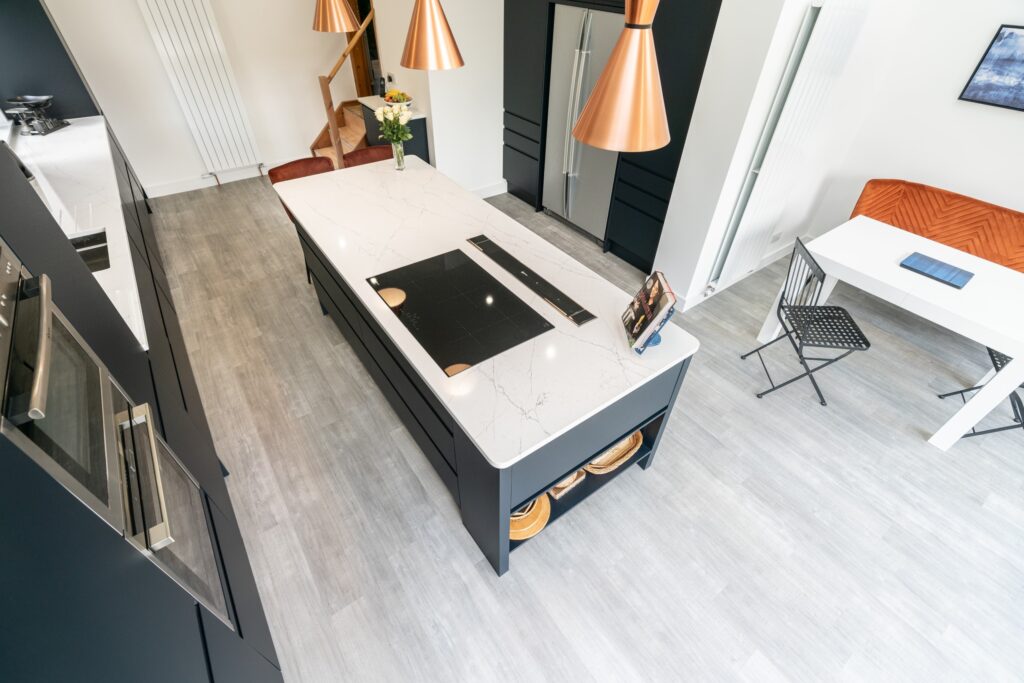
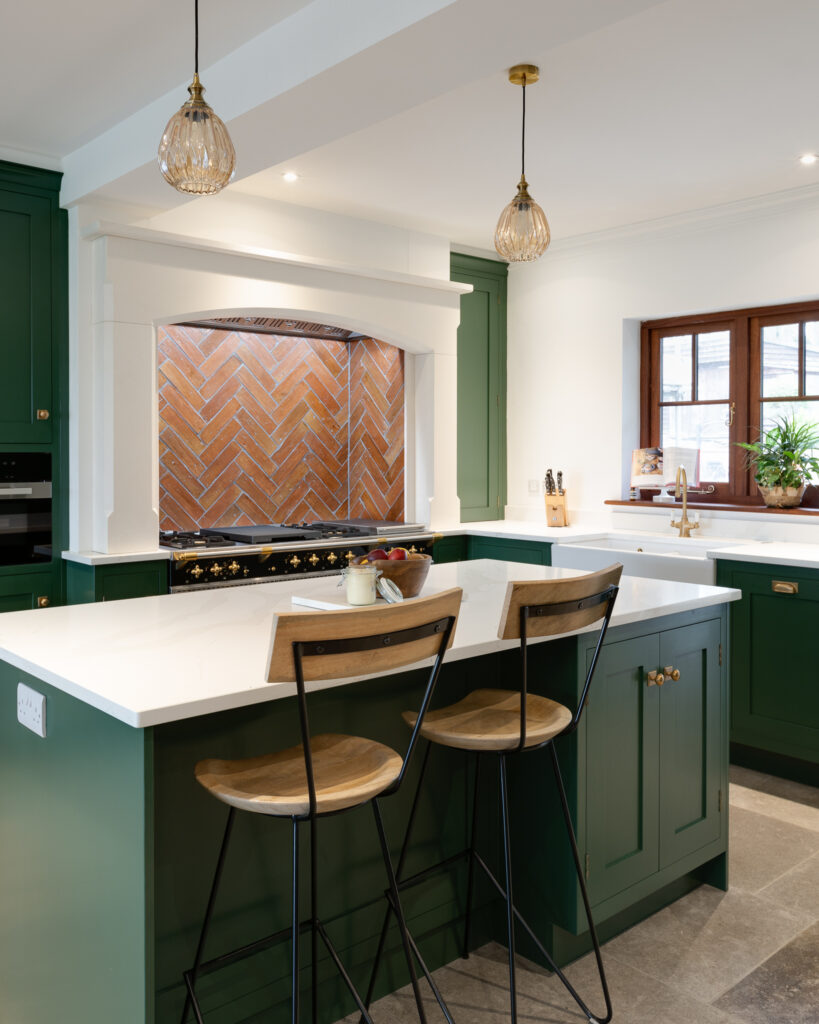
A kitchen island is a freestanding, often multi-functional, unit typically located in the centre of a kitchen. It is not connected to any other part of the kitchen with the worktop being crafted from various materials such as quartz, porcelain and granite. They can vary greatly in size, shape and design, depending on the needs and layout of the kitchen. A kitchen island is a valuable addition to any kitchen, enhancing both its functionality and aesthetic appeal.
Key Features
- The top of a kitchen island serves as an additional work surface ideal for food prep, baking, and other cooking activities.
- Cabinets, drawers and shelves are often included on a kitchen island, providing extra storage space for pots, pans, utensils, and other kitchen essentials.
- Often an overhang is designed onto the island to accommodate bar stools or chairs, making it a casual dining area for guests to sit and chat with the cook while dinner is prepared and cooked.
- Some homeowners choose their kitchen islands to be equipped with built-in appliances such as sinks, cooktops, or dishwashers, adding to the functionality of the kitchen.
- Overhead lighting over the island such as pendant lights ensures the work area is well-lit.
- Kitchen islands can complement the overall style of the kitchen, and serve as a focal point, adding visual interest to the room.
Benefits
- Additional worktop space, which is especially useful in smaller kitchens or for large meal preparations.
- Extra storage to reduce clutter and provide storage options for kitchen items.
- A social hub for family and friends to gather, making the kitchen more interactive.
- Can serve as a breakfast bar or informal dining area, adding versatility to the kitchen space.
- The kitchen island can streamline cooking processes with built-in appliances to make the kitchen more efficient.
What is a breakfast bar?
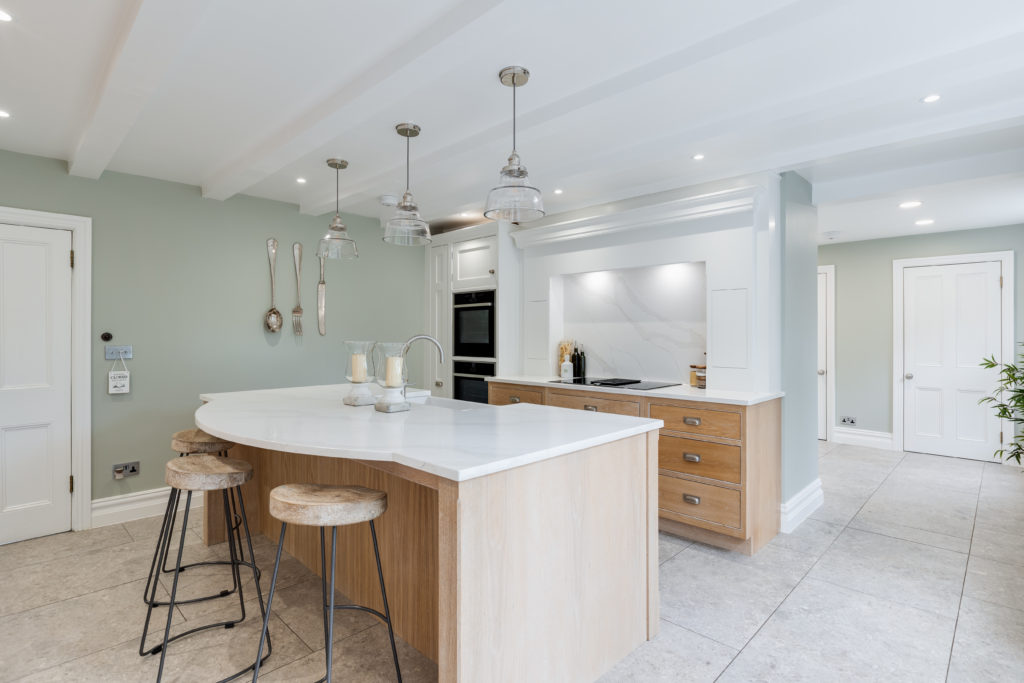
A breakfast bar is typically attached to a kitchen island, peninsula, or the edge of a countertop, designed for casual dining or quick meals. It’s an overhang of a worktop, providing a comfortable seating space and can feature materials like quartz, porcelain and granite for a stylish and functional space. A breakfast bar is a functional, space-efficient feature that enhances the usability and social atmosphere of a kitchen, an appealing option for modern homes.
Key Features
- The worktops of a breakfast bar are usually higher than the standard kitchen counter, and often around 36 to 42 inches in height. This elevated design accommodates bar stools or high chairs.
- It’s usually designed to typically sit two to four people, depending on the length of the bar. The seats are usually located on one side of the counter in a L-shape, or around the corner to create social space for conversations and interactions.
- They can become a space-saving design where space is limited and a full dining table might not fit. A dedicated eating area is created without taking up too much room.
- A breakfast bar is intended for quick, informal meals, a convenient spot for breakfast, coffee, or a snack. It can also be used as a workspace or a place to do homework.
- Serving for multiple purposes, the breakfast bar can be extra prep space, a serving area during parties, or a place to lay out a buffet.
- Breakfast bars often integrate into the kitchen’s overall design, matching the materials and style of the worktops seen elsewhere in the room. They can be part of a kitchen island, attached to a wall, or extend from a peninsula.
Benefits
- A convenient spot for quick and easy meals, and ideal for busy mornings.
- Conversations and interaction are encouraged especially when someone is cooking while others are seated at the bar.
- Utilises vertical space effectively.
- It serves multiple purposes, including additional workspace, dining and enhancing the kitchen’s versatility.
Space
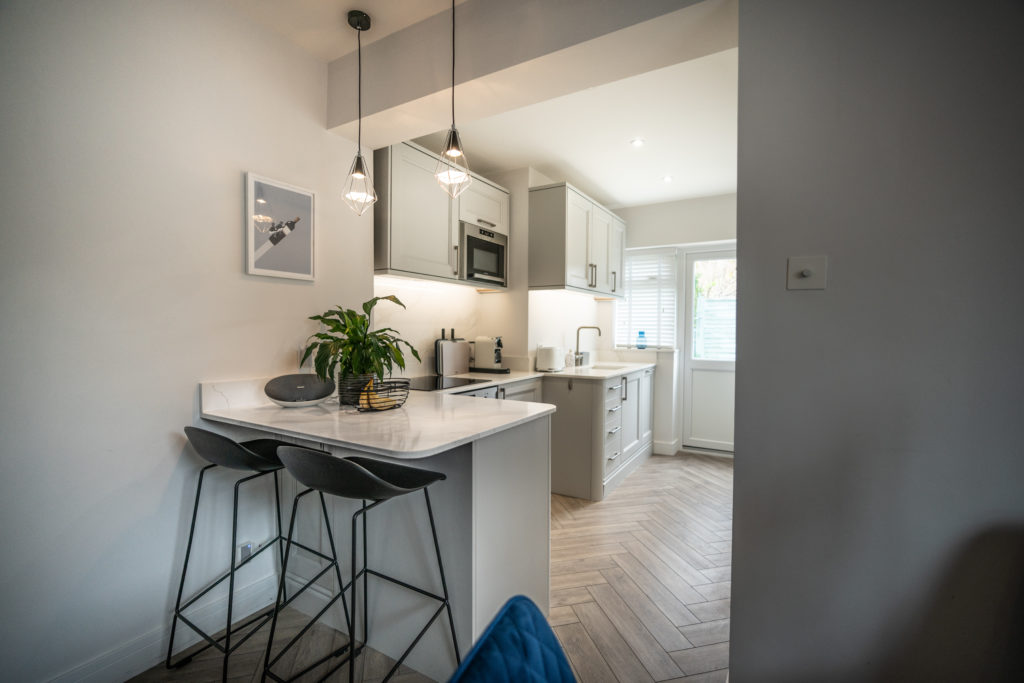
You need to consider the size and layout of your kitchen first. A kitchen island requires more space, as it is a freestanding unit that can be accessed from all sides. It works best in larger kitchens where there’s enough room to move around comfortably.
A breakfast bar, on the other hand, is often integrated into a countertop or part of the kitchen layout. It can be attached to a wall, extending a countertop, or be part of a peninsula and island.
Functionality
How will you use your space? A kitchen island offers versatility; it can serve as additional prep space, a place to install appliances like a sink or hob, or a gathering spot for socialising. Islands are ideal for multi-functional kitchens where cooking, entertaining, and dining happen.
A breakfast bar is more focused on and designed for casual dining and social interaction. It’s a spot where you can have a quick meal, coffee with guests or chat with family and friends while cooking.
Storage
Storage is a crucial part of the kitchen design. Kitchen islands are known for the storage solutions they provide. An island can be a valuable addition if you lack storage space.
Breakfast bars generally offer less storage, but can still provide some storage options depending on its design.
Design
Both a kitchen island and a breakfast bar can enhance the look of the kitchen, but the style may change and have an influence on your decision. A kitchen island can make a bold statement, becoming a focal point of the room and where family and friends gather.
A breakfast bar offers a more streamlined and subtle look, especially in smaller kitchens. It can seamlessly integrate into the kitchen design, providing function without overwhelming the space.
Budget
Working with a budget can also play a role in your decision. Kitchen islands can be more expensive due to their size and potential functions. They often require more materials and labour, which can increase costs.
Breakfast bars are more of a budget-friendly option, as they require fewer materials and are easier to install, making them a cost-effective choice for homeowners who have tighter budgets.
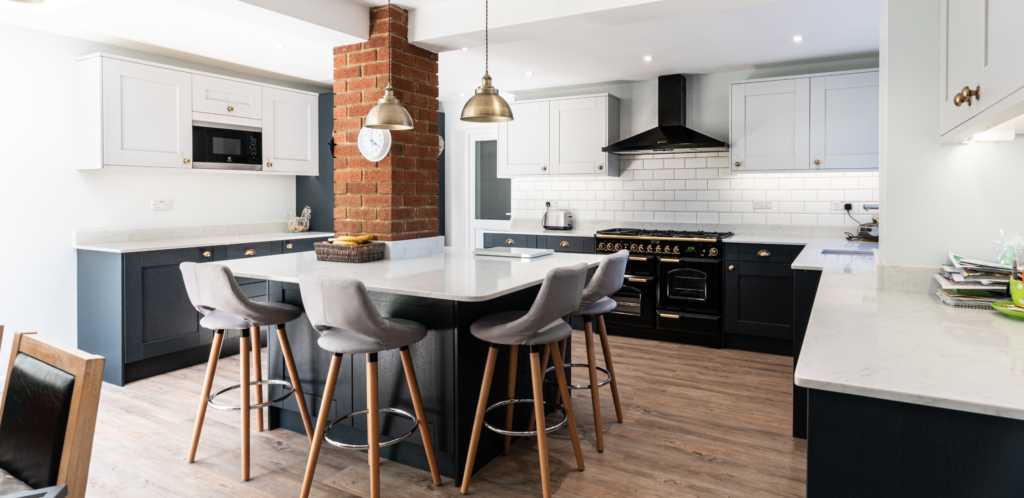
Choosing a Worktop Material
Choosing the right worktop for your kitchen island or breakfast bar is a crucial decision that impacts the functionality and aesthetics of your kitchen. Below are some kitchen countertops to help you choose.
Quartz Worktops
Quartz is one of the hardest stone materials, making it exceptionally durable with a non-porous surface that resists stains, scratches, and abrasions. It also offers excellent anti-bacterial properties, ideal for a kitchen where food preparation, chopping, cooking, and daily activities require a resilient surface.
Porcelain Worktops
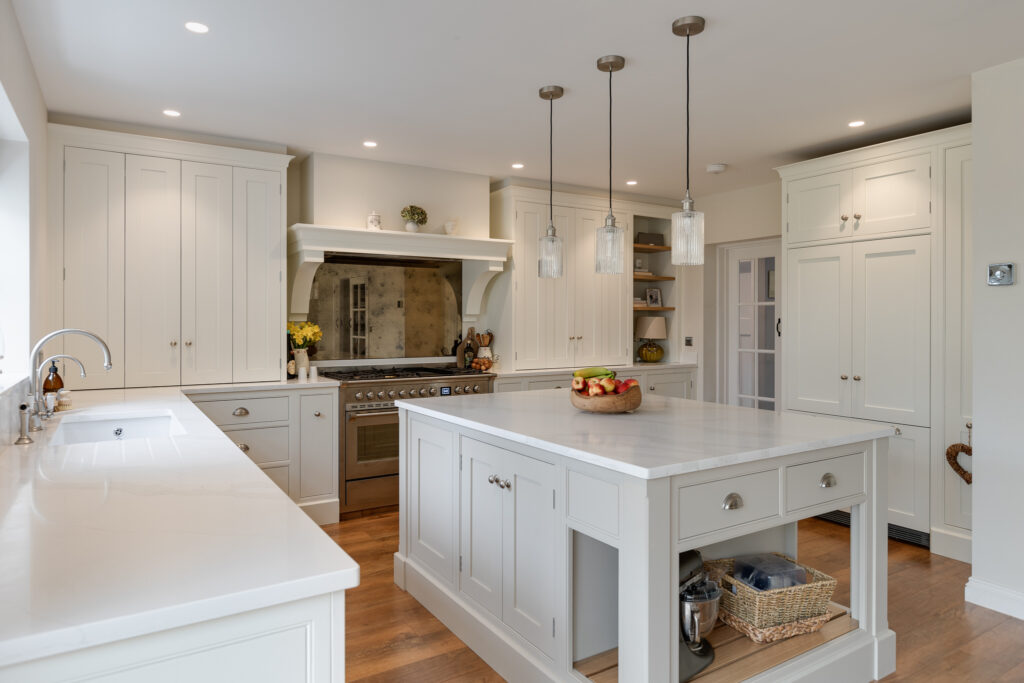
Porcelain is an innovative option in the world of kitchen worktops, offering a blend of style, durability, and practicality. Made from natural materials, these worktops are engineered to withstand a variety of kitchen challenges while providing a sleek and modern appearance.
Low Silica Mineral Worktops
Low Silica Mineral worktops are engineered surfaces that contain reduced levels of crystalline silica, a naturally occurring mineral found in many stones. They are an excellent choice for those looking to combine the beauty and durability of stone surfaces with enhanced safety and environmental benefits.
Granite Worktops
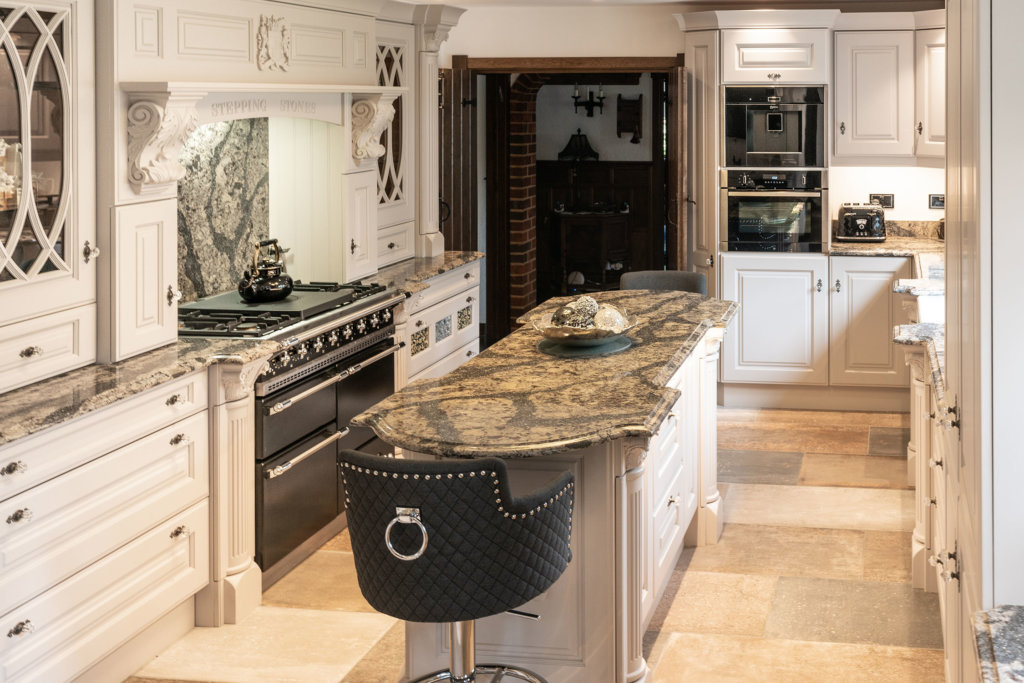
Granite is formed from molten rock that cools and solidifies over millions of years. It is prized for its durability, natural beauty and unique patterns, as each slab is one-of-a-kind.
Kitchen island and breakfast bar FAQs
How much space do you need for a kitchen island?
As a working rule, allow at least 1 metre of clear floor between the island and the surrounding units so people can pass and open doors comfortably. If your kitchen cannot give up that much on every side, a peninsula or breakfast bar will serve you better than a cramped island.
What is the right height for a breakfast bar?
Breakfast bars typically sit at around 900mm to 1050mm, higher than a standard worktop at roughly 900mm. The height you choose dictates the stool height, so decide both together rather than buying stools afterwards.
How much overhang do you need for seating?
Allow around 300mm of overhang for comfortable knee space. Less than 250mm and people end up sitting sideways. Anything beyond 300mm usually needs support brackets or a corbel, which we will advise on at templating.
Can you have both an island and a breakfast bar?
Yes, and it is very common. Extending the worktop on one side of an island gives you a breakfast bar without needing a separate structure. This is often the best answer when a kitchen has the space for an island but the family also wants casual seating.
Which is cheaper?
A breakfast bar, in most cases. It uses less material and is simpler to install. An island needs more stone, more cabinetry and often plumbing or electrics if you are adding a sink or hob.
Where can I see island and breakfast bar worktops in person?
Our Welwyn showroom in Hertfordshire displays full slabs across quartz, porcelain, granite and mineral surfaces, so you can judge scale and veining properly. We work with homeowners, designers and architects across Hertfordshire, including St Albans, Harpenden, Hertford and Hatfield, as well as North London and the wider South East.
We hope we have given you enough information to choose between a kitchen island and a breakfast bar. Both options have unique advantages and weighing up the factors that matter to you the most will hopefully help you choose one. Whether a multi-functional kitchen island is the right solution for your practical needs or the cosy benefits of a breakfast bar, your choice should enhance your kitchen’s beauty and functionality.