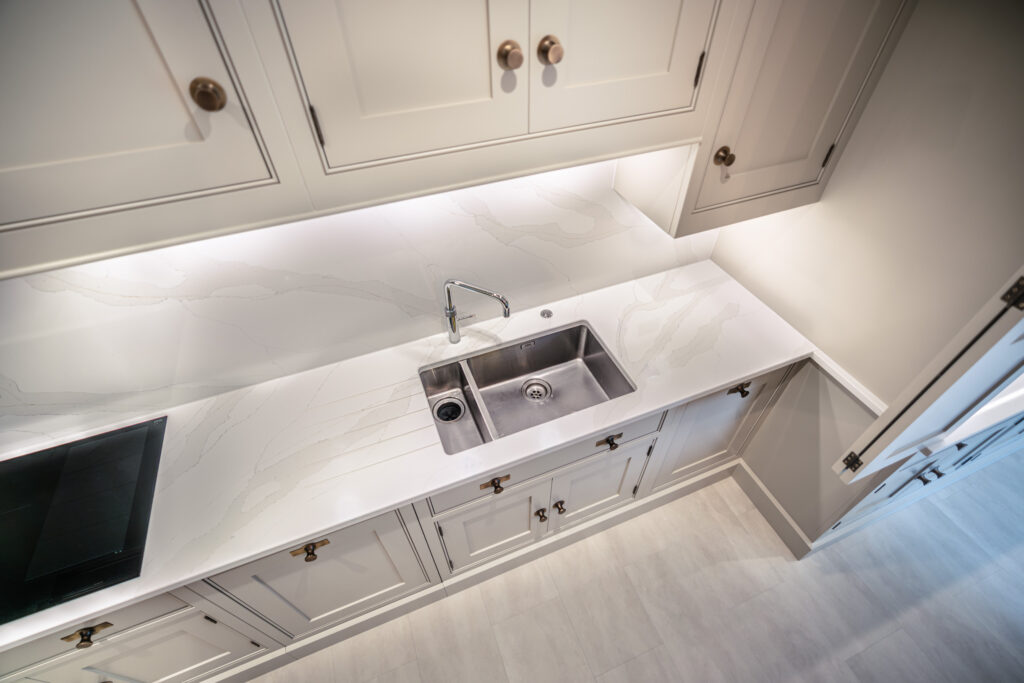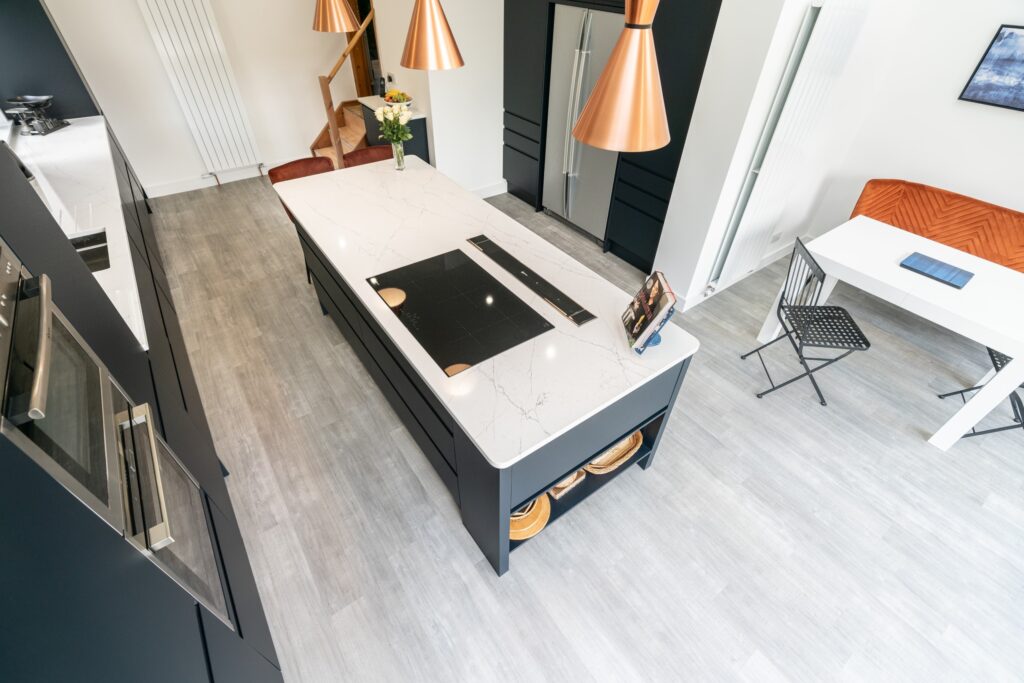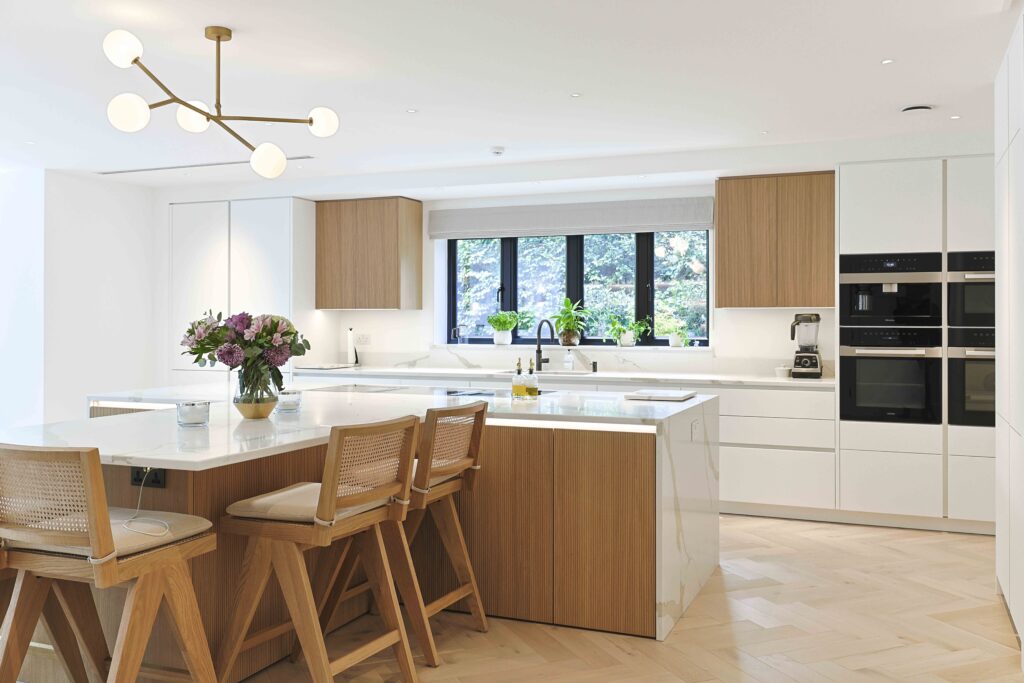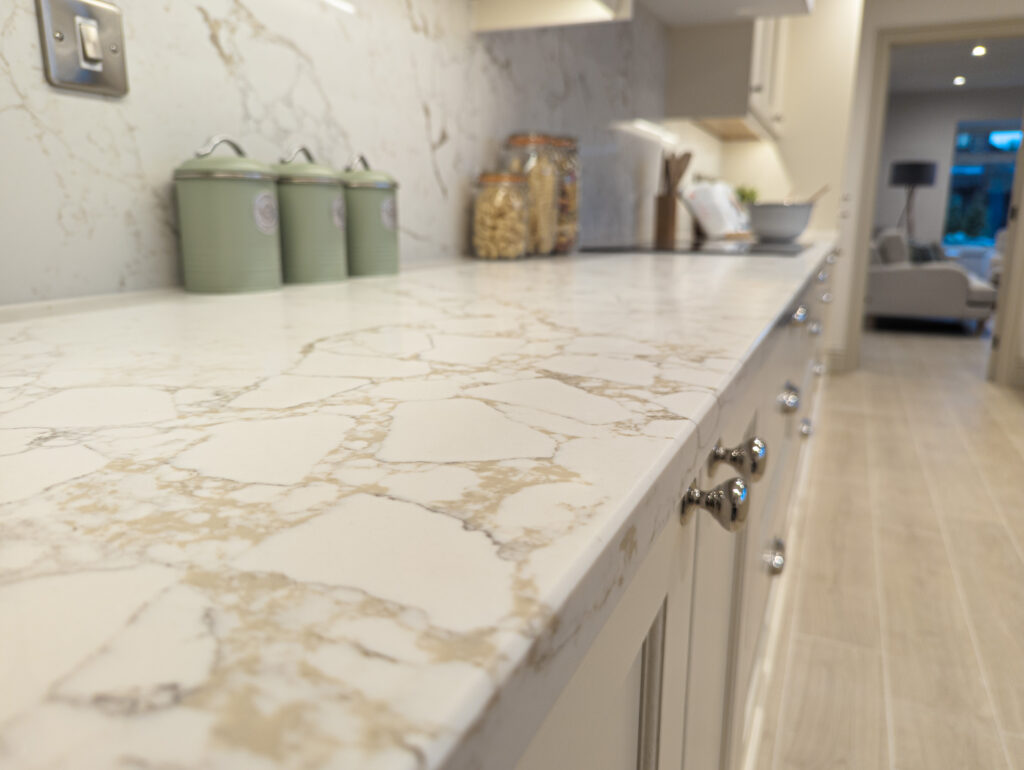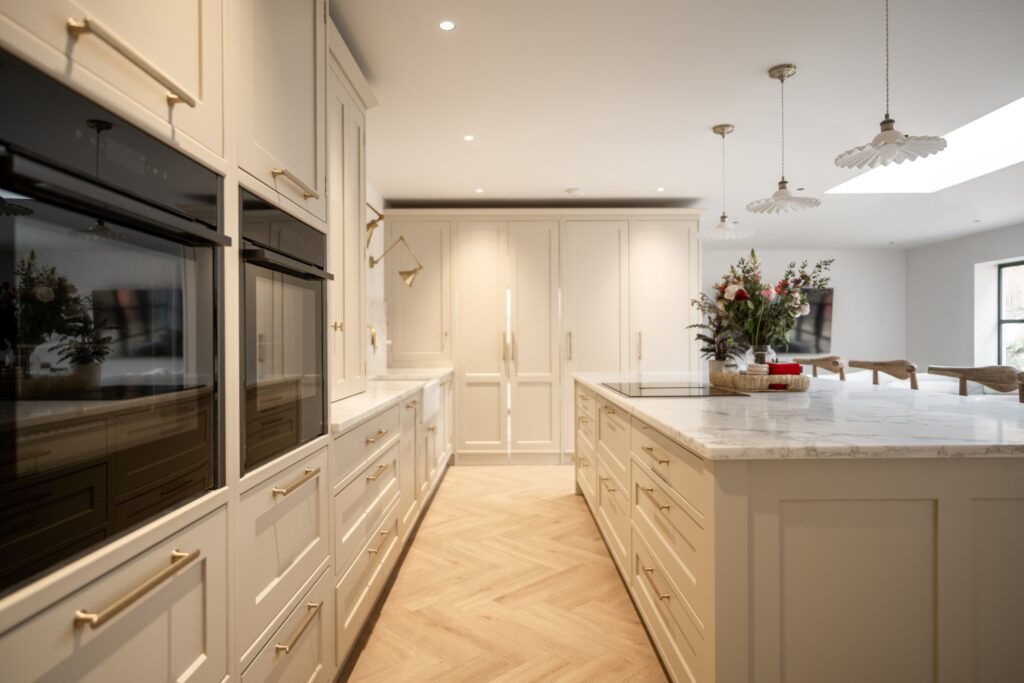
Making your choice for the kitchen worktop came from the look, colour, durability, maintenance, and budget available, and the technology worked around whatever surface you selected.
Today, the picture is more complicated, and in many ways more interesting. Kitchen technology has advanced to the point where it interacts directly with the worktop. Invisible induction hobs cook through the stone, wireless chargers transmit power beneath it, and downdraft extractors rise from within it. As a result, a genuine question has emerged that homeowners didn’t ask a decade ago: should you choose your worktop material first and fit the technology around it? Or should you decide on your technology first and let that guide your material?
It’s a common question we are asked at Cawdor Stone, and our guide below is how we think about it.

In Short: It Depends on How Much the Technology Matters to You
The honest answer depends on how central the technology is to your vision for the kitchen. For most homeowners, the worktop material leads and the technology follows. For others with specific, non-negotiable technology requirements, it works the other way around.
The key is understanding which category you fall into before you start making decisions.
When Your Material Should Lead
For the majority of kitchens, the worktop material is the right place to start. Here is why.
The worktop is one of the most visually dominant elements in any kitchen. It is the largest continuous surface in the room, setting the tone for the entire space, and it is the element your eye returns to again and again. Furthermore, it is a surface you will touch, use and look at every single day for a decade or more. The emotional and aesthetic connection you have with your worktop matters enormously, and it should not be compromised for the sake of a piece of technology.
Fortunately, most kitchen technology is compatible with most stone worktop materials. Wireless charging can work through quartz, granite, sintered stone and porcelain. Pop-up sockets can be cut into any of them. Flush-fit hobs, undermount sinks, integrated drainage grooves and downdraft extractors all work across the full range of materials. In other words, choosing the surface you love first rarely rules out the technology you want.
For the vast majority of our projects, our advice is to choose the material that speaks to you, and then plan the technology around it. We can make the technology work with any of your chosen surfaces.

When Your Technology Should Lead
One significant exception that can change the entire order of decision-making for some homeowners is this: if invisible induction cooking is a firm yes for your kitchen, then the technology should lead, and the material should follow. This is because invisible induction places genuine demands on the worktop that not every material can meet equally well.
Invisible induction requires a surface that transmits electromagnetic energy efficiently, withstands sustained thermal cycling, and comes in the right thickness. Sintered stone meets the requirements, which is why it’s the material of choice for the vast majority of invisible induction installations. Granite works as a natural, non-ferrous option. Quartz, however, contains polymer resins that are sensitive to sustained heat, making it less suitable for an application in which the worktop itself serves as the cooking surface.
Therefore, if invisible induction is central to your vision, it makes sense to commit to that technology first and then choose from the materials that are genuinely well suited to it.
The Technologies That Do Not Dictate Material
It is worth being clear about which technology genuinely influences material choice and which do not.
- Wireless charging doesn’t dictate your material; it’s the thickness that needs to be considered. Quartz, granite and sintered stone all accommodate wireless charging.
- Pop-up sockets do not dictate your material; they require a cut-out that needs to be machined professionally into the stone surface.
- Downdraft extractors do not dictate your material either; they influence worktop depth and cutout precision, and work with quartz, granite, sintered stone and porcelain.
- Flush-fit hobs, undermount sinks and integrated drainage grooves do not dictate material. They are precision fabrication features that work across the full range of stone.

The Middle Path: Plan For Both Together
The best kitchens are designed by considering both material and technology together from the very beginning.
This is where working with an experienced stone fabricator early in the process makes a real difference. When you bring your material preferences and your technology intentions to the table at the same time, our team at Cawdor Stone can help you find the point where they meet. So, if your heart is set on quartz and you also want invisible induction, we can have an honest conversation about the trade-offs and help you decide whether to adjust the material or the technology. If you prefer a sintered stone and every piece of smart technology available, we can plan the fabrication accordingly.
The mistake we often see is that homeowners make a decision and discover its constraints later on.
Ask Yourself These Questions Before You Decide
- Is there any single piece of technology that is non-negotiable for you? If invisible induction is a must-have, let it lead.
- How much does the appearance of the worktop matter to the technology?
- Are you planning to install everything now, or might you add technology later?
- Do you have a fabricator in mind?

Related blogs:
Future-Proofing a Quartz Worktop: What to Plan for Now Even If You Are Not Ready Yet
How Kitchen Technology Is Changing Worktop Design and Layout
The Rise of the Downdraft Extractor: How It Affects Your Worktop Layout and Material Choice
Wireless Charging Built Into Your Worktop: How It Works and Which Surfaces Support It
What is InvisaCook? The Invisible Induction Hob Explained
Whether you are leading with material, leading with technology, or trying to balance both, the conversation is far easier with an experienced fabricator alongside you. We have over 40 years of experience helping homeowners find the point where the surface they love meets the kitchen they want.
Visit our Hertfordshire showroom to see the materials, discuss your technology plans, and let us help you make a decision you will be happy with for years to come.