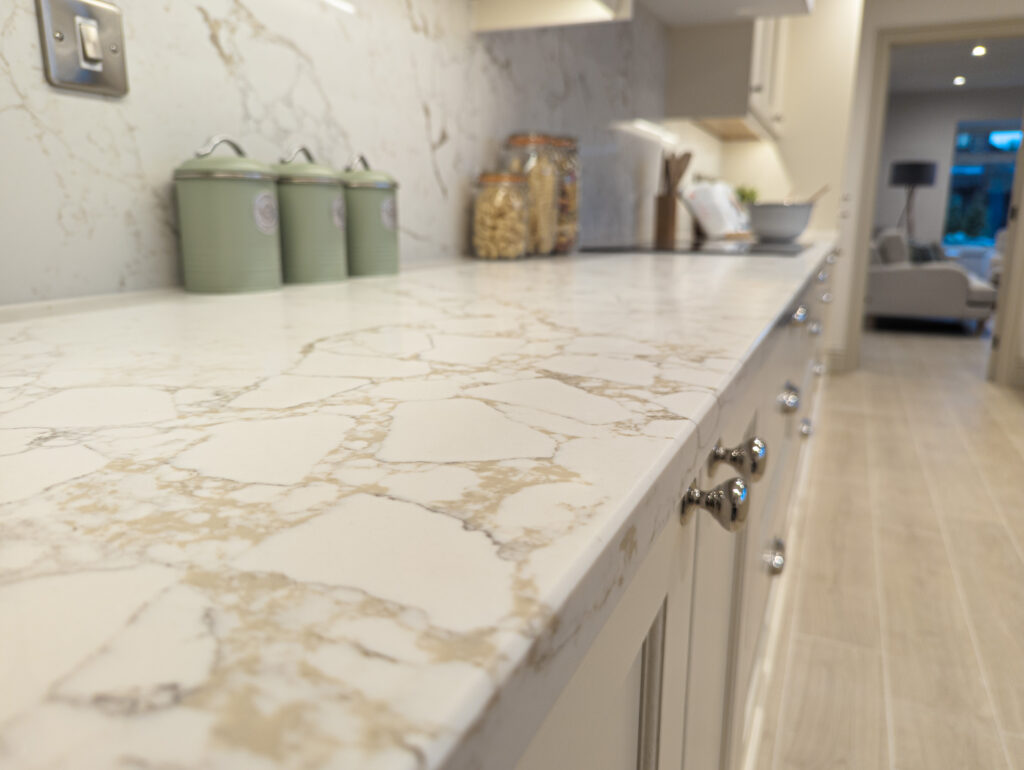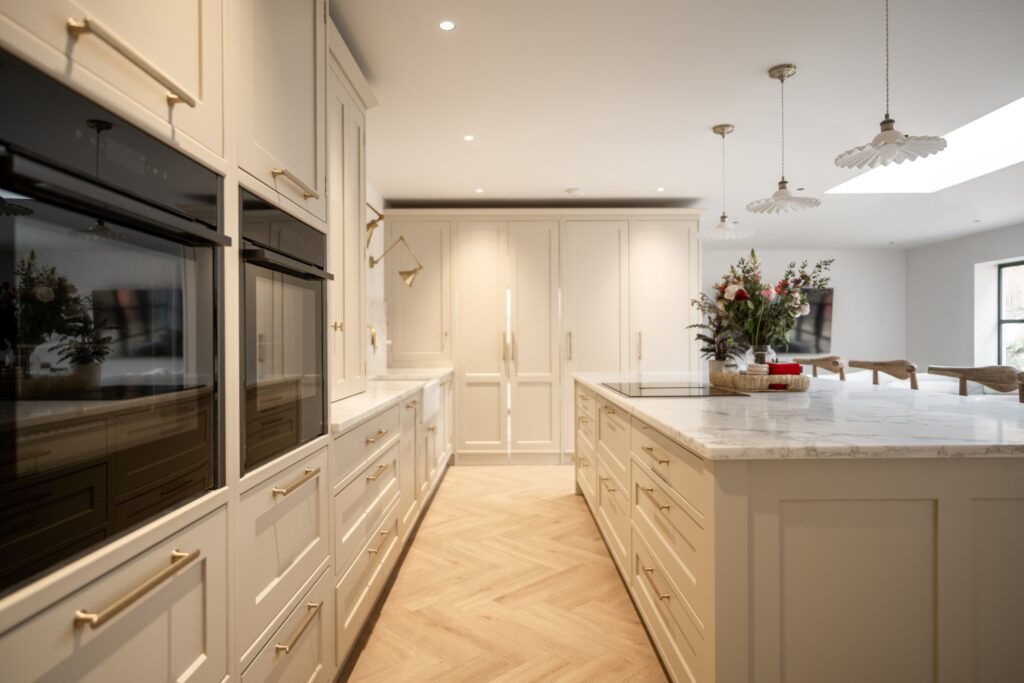
Imagine stepping into a kitchen with a full sweep of beautiful stone across the surface, no hob or glass cooktop and no visible burners or controls. Just a delightful worktop that stretches from one end to the other. Then all of a sudden you see someone place a pan on the surface, and it starts to heat.
This is the magic of InvisaCook, and it is already being installed in kitchens across Europe and the UK. As stone worktop specialists with 40 years in the industry, we have been watching this technology closely, because the worktop material you choose is the most important decision in the entire installation.
We have put together the following blog on everything you need to know about InvisaCook, a premium cooking platform built around hidden performance.
Note we do not currently stock or display InvisaCook products. We may have similar products we can offer you, so please get in touch.
Quick answer: what is InvisaCook?
InvisaCook is an invisible induction cooking system that mounts beneath your stone worktop, allowing you to cook directly on the surface with no visible hob, glass panel or cutout. It works best with sintered stone and porcelain at 12mm to 20mm thickness, where the electromagnetic field passes cleanly through the stone to heat induction-compatible cookware. Granite milled to 2cm in the cooking zone can be used at the owner’s risk; quartz is generally not recommended due to heat sensitivity.
How Does InvisaCook Work?
Your countertop remains the visual centrepiece of your kitchen while still functioning as an induction cooking surface when needed.
InvisaCook uses the same principle as an induction hob: electromagnetic coils generate a magnetic field that transfers energy directly into the base of compatible cookware. The pan is heated rather than the surface beneath it; this is the difference.
With a traditional induction hob, the coils are housed beneath a glass-ceramic panel that is cut into your worktop. With InvisaCook, the coils are mounted under the worktop itself. There is no cutout, no glass panel or visible indication that a hob exists at all. The electromagnetic field passes through the stone, and the cooking happens on what appears to be a completely ordinary work surface.
The control panel can be installed either in a drawer beneath the worktop or on the surface itself, depending on the configuration. When the system is not in use, you are left with a fully functional, uninterrupted worktop, which is perfect for minimal living.
When it’s time to cook, you simply place an induction-compatible pan on the designated zone, and the system activates. Your worktop becomes your hob, and when you are finished cooking, it becomes your worktop again.

Why is Everyone Talking About This Latest Kitchen Technology?
Homeowners look for the latest modern trends that take their cooking and kitchen to the next level. InvisaCook brings two trends to the table: firstly, it pushes towards minimalist, seamless kitchen design and secondly, shifts away from gas cooking towards induction cooking.
What InvisaCook does is take both trends and create an innovation perfect for modern living. It doesn’t just replace a gas hob; it removes the visible appliance entirely. For those who want a truly seamless aesthetic, this is a significant step forward.
Furthermore, the practical benefits go beyond appearance. It’s easier to clean. All it takes is a cloth that wipes across the surface. And safety is another consideration, particularly for families with young children. The risk of accidental contact is significantly reduced, and InvisaCook includes automatic shut-off features and smart sensors for additional peace of mind.
Which Worktop Materials are Compatible with InvisaCook?
Our expertise as stone fabricators is particularly relevant in this section, because the worktop material is absolutely central to how well the InvisaCook system performs.
Large-format materials in the 12mm to 20mm range, such as porcelain and sintered stone, are recommended; granite can be used when milled to 2cm in the cooktop area, but it requires review and is used at the owner’s risk.
The electromagnetic field must pass through the worktop without significant energy loss, which means the surface must be conductive, non-ferrous, and able to withstand sustained heat transfer.
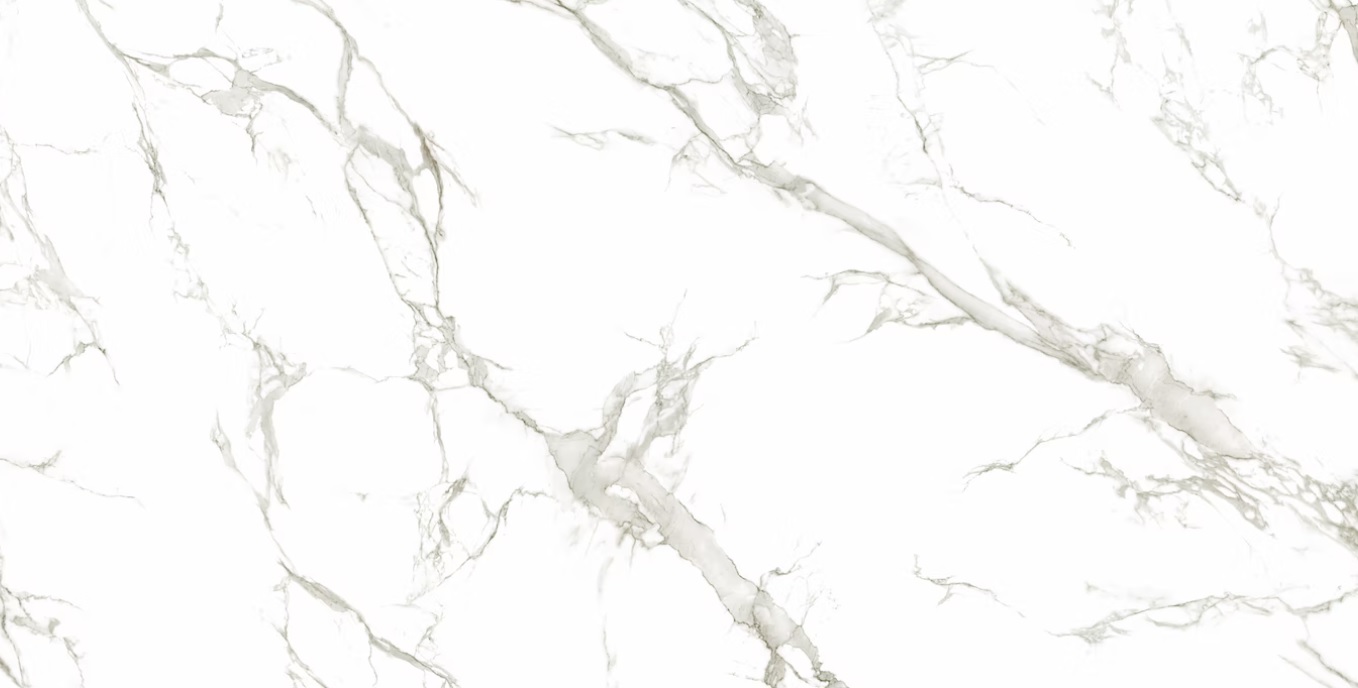
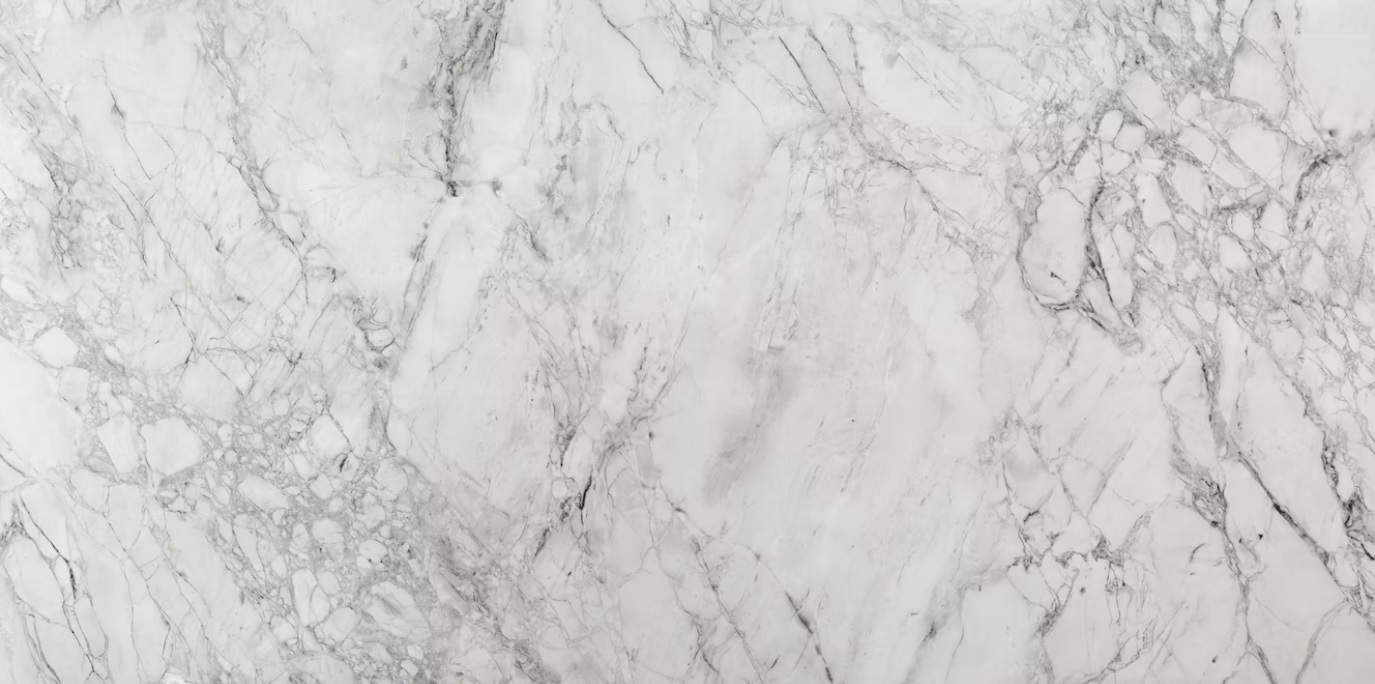
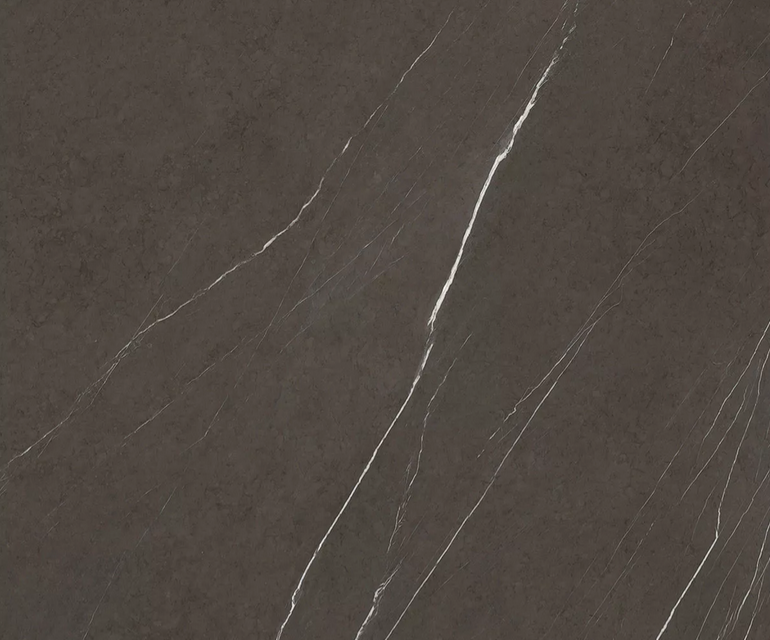
Sintered stone is regarded as the ideal partner for InvisaCook. Surfaces such as Dekton, Neolith, Laminam and Ascale are engineered to handle heat. Because sintered stone is manufactured at temperatures above 1,200°C, it is inherently resistant to the thermal stress that invisible induction creates. Additionally, sintered stone is available in thicknesses that work perfectly with the system. This is the stone we recommend to our customers when InvisaCook is part of the brief.
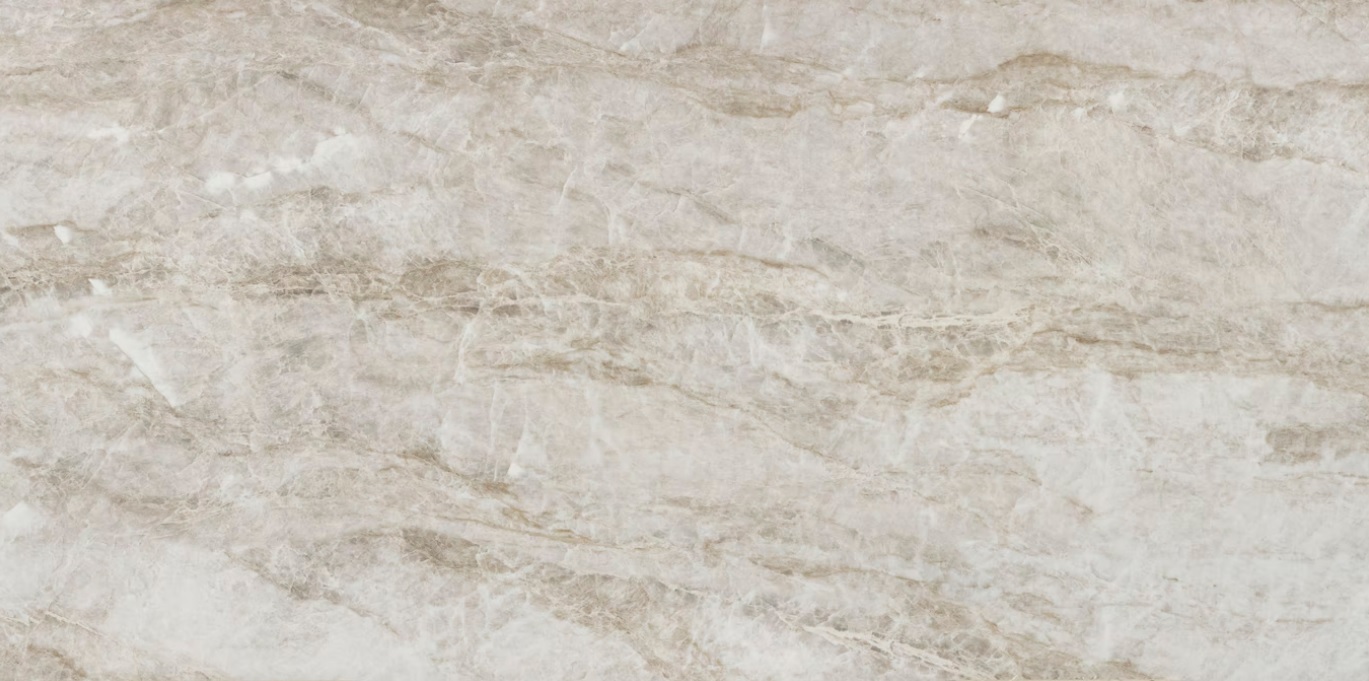
Marble is generally not recommended for InvisaCook because it’s typically too thick and too thermally insulated for the induction to transfer effectively. Quartz is typically not recommended due to heat sensitivity.
InvisaCook worktop compatibility at a glance:
- Sintered stone (Dekton, Neolith, Laminam, Ascale) at 12mm to 20mm: recommended, the ideal partner
- Porcelain at 12mm to 20mm: recommended
- Granite milled to 2cm in the cooking zone: possible, subject to review and at the owner’s risk
- Quartz: generally not recommended, heat sensitive resin binders
- Marble: not recommended, too thick and too thermally insulated
- Any surface with a metallic component will block the field and will not work







What Cookware Do You Need?
Like all induction cooking, InvisaCook only works with cookware that has magnetic properties. Full-clad stainless steel and purpose-built induction pans are the most compatible options. InvisaCook also offers its own dedicated cookware range, designed around this type of use and optimal performance with the system.
It is worth being aware of other cookware materials such as aluminium, copper, glass and standard ceramic. These will not work unless they have a magnetic layer bonded to the base. InvisaCook advises against cast iron because it retains and reflects very high levels of heat, which, over time, could stress the worktop surface.

What About the Practical Realities?
We have established that InvisaCook is an impressive piece of technology, but it is worth understanding the practicalities before committing.
A Warm Surface
InvisaCook heats the cookware, and not the worktop. However, the surface can become warm during cooking. For short cooking sessions, the surface stays relatively cool. If cooking for longer than ten minutes and at high power, the area around the cooking zone will become noticeably warm and eventually hot to the touch. This is normal.
Specialist Installation
It is not a plug-and-play appliance. The installation requires specialist work to mount the coils beneath the worktop with millimetre precision. Any misalignment can reduce efficiency or prevent the system from detecting the cookware. The worktop also needs to be the correct thickness, typically 12mm or 20mm, and the underside must be accessible for installation and any future servicing.
You need to have a good relationship between your worktop fabricator and your InvisaCook dealer to get the job done properly. The stone needs to be specified, fabricated and installed with the induction system in mind from the very beginning.
Configuration Layouts
The system can be tailored to your cooking style and kitchen layout. You can choose from one-burner to five-burner; they are suited to all areas of the kitchen and open-plan entertaining spaces, including the island.
Cost is Premium
It sits at the premium end of the market due to the combined specialist work of worktop fabrication, electrical work and professional installation. However, for homeowners who prioritise seamless design, safety and the sheer visual impact of a kitchen with no visible hob, it offers something that no other technology currently can.
Why Your Worktop Fabricator Matters
Most of your research on InvisaCook will focus on the technology behind it and how it elevates your cooking experience. We have found very few sources that discuss in detail the critical role of the worktop in delivering the promised results.
The stone is one of the most important parts of this kitchen innovation. The material, thickness, density, thermal properties and the precision of the fabrication all directly affect how well InvisaCook performs. If the slab is too thick, too porous, or incorrectly prepared, it will compromise the system; a slab that is precisely specified and expertly fabricated will allow InvisaCook to deliver everything it promises.
This is where we, Cawdor Stone Gallery, add genuine value. We understand the technical properties of every material we carry. When a customer comes to us with an InvisaCook project, we can advise on the right material, thickness, and fabrication approach to ensure the system works as it should.

Is InvisaCook the Future of Kitchen Design?
It is certainly an impressive innovation that we have seen and has to be one of the most exciting. The ability to cook on what appears to be a seamless stone surface, with no visible appliance breaking the line of the worktop, represents a genuine shift in how modern kitchens can be designed and experienced.
The technology is being valued by an increasing number of architects and interior designers, with over 60% of InvisaCook orders coming through design professionals, which tells you where the industry is heading.
For homeowners who value clean design and seamless surfaces, InvisaCook is worth serious consideration.
InvisaCook FAQs
Can you use InvisaCook with a quartz worktop?
InvisaCook is not generally recommended for quartz worktops. Quartz is heat-sensitive, and sustained heat transfer from prolonged induction cooking can stress the resin binders in the slab. Sintered stone and porcelain are the preferred materials.
How thick should the worktop be for InvisaCook?
InvisaCook works best with worktops between 12mm and 20mm thick. Sintered stone and porcelain at this thickness allow the electromagnetic field to transfer efficiently. Granite milled down to 2cm in the cooking zone can be used at the owner’s risk.
Does the worktop get hot when using InvisaCook?
InvisaCook heats the cookware, not the worktop. During short cooking sessions the surface stays relatively cool. Cooking for longer than ten minutes at high power will warm the area around the cooking zone, which is normal.
Is InvisaCook safe around children?
Yes. Because there is no visible hob and no exposed glass cooktop, the risk of accidental contact is significantly reduced. InvisaCook includes automatic shut-off features and smart sensors that detect when cookware is removed and when the surface needs to power down.
What cookware works with InvisaCook?
Any induction-compatible cookware with magnetic properties, such as full-clad stainless steel or purpose-built induction pans. Aluminium, copper, glass and standard ceramic will not work unless they have a magnetic layer bonded to the base. InvisaCook advises against cast iron because it retains and reflects very high levels of heat.
Where can I see InvisaCook with a stone worktop in person?
Note we do not currently stock or display InvisaCook products; our Welwyn showroom in Hertfordshire carries the porcelain and sintered stone surfaces recommended for InvisaCook installations. We serve homeowners, designers and architects across Hertfordshire, including St Albans, Harpenden, Hertford, Hatfield and the wider South East, as well as North London.

Related blogs:
Can You Put Hot Pans on Sintered Stone? What You Need to Know Before You Buy
Celebrating 40 Years: The Cawdor Stone Gallery Story
Sintered Surfaces: Why Choose This Surface for the Home?
Why Dekton is the Ideal Surface for Busy Kitchens
The Frequently Asked Questions About Dekton Worktops
The Pros & Cons Of Dekton Worktops
Talk to Cawdor Stone Gallery about your InvisaCook project today. We have a vast range of porcelain and sintered stone and can advise you on which material is the best fit for an invisible induction installation.
Visit our Welwyn showroom in Hertfordshire to see and feel the surfaces for yourself, discuss your project, and make sure your worktop is perfectly suited. We work with clients across Hertfordshire, North London and the wider South East. With 40 years in stone, we know what these materials can do, and we can help you get the most out of this remarkable technology now on the market.