Quick answer: How kitchen worktops are made has changed enormously since 1986. Forty years ago, granite was hand-cut with diamond saws, polished by hand and templated using cardboard strips. Today, slabs of quartz, sintered stone and granite are templated with laser scanners, cut and edge-profiled by CNC machines to millimetre precision, and bookmatched for seamless veining. The materials have evolved from a handful of granites to engineered quartz (Caesarstone, Silestone) and ultra-compact sintered stone (Dekton, Neolith) manufactured under extreme pressure and over 1,200°C heat.
Let us go back to 1986, when most British kitchens had laminate worktops. You would only see stone in grand country houses, commercial fit-outs and the occasional high-end renovation. If you wanted a granite worktop, you were dealing with a niche trade, heavyweight slabs and a very manual process.
Fast forward forty years and stone worktops are one of the most popular choices in UK kitchens, and the way they are made, finished and fitted has changed beyond recognition. As we celebrate 40 years in the stone industry from our Hertfordshire showroom, we wanted to look back at how worktop fabrication has evolved and what it means for homeowners choosing a worktop today.
The 1980s: When Granite Was the Only Stone Choice
When we first started in 1986, granite was essentially the only natural stone used for kitchen worktops. Marble was considered too soft and porous, and engineered surfaces such as quartz were still years away from the mainstream.
Fabrication was a physical, labour-intensive craft. Slabs were cut using diamond-tipped bridge saws that required constant water cooling. Shaping, edging and finishing were done by hand with angle grinders, polishing pads and a great deal of patience. Templating was done with strips of cardboard or MDF, and accuracy depended entirely on the skill of the person holding the pencil.
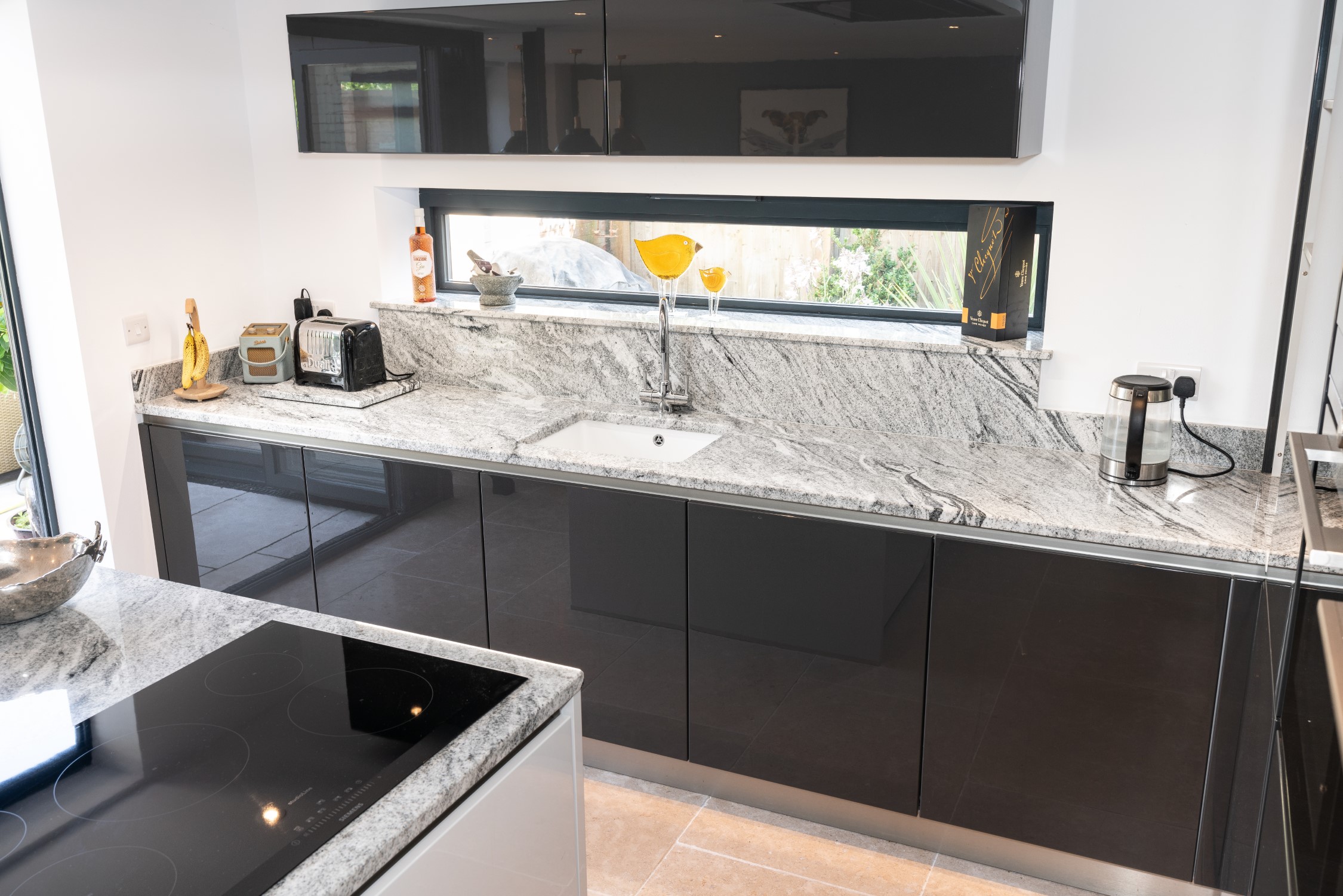
There was not much of a material palette in the eighties. You had a handful of granites quarried from Brazil, India and Scandinavia, with the colours tending towards dark greys, blacks and deep reds. Back then, a polished black granite worktop was the pinnacle of kitchen luxury.
Today, granite remains as popular as ever, just with vastly more colours, finishes and edge profiles available than the homeowners of 1986 could have imagined.

The 1990s: Quartz Enters the Market
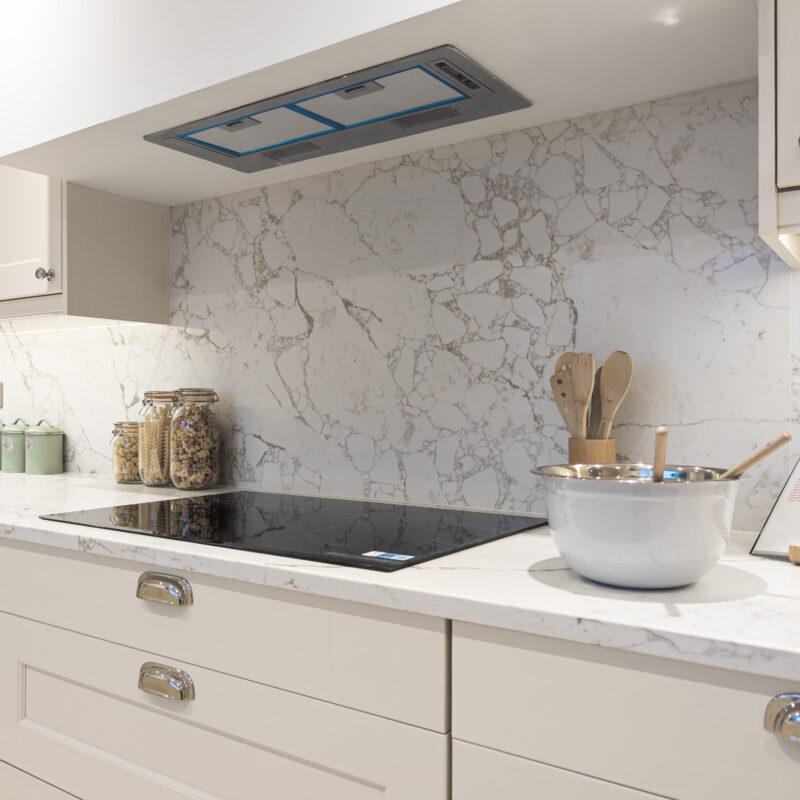
In the 1990s, the first engineered quartz surfaces hit the UK market. Brands like Caesarstone and Silestone introduced a material that combined crushed natural quartz with polymer resins, offering more consistent colour and pattern than natural stone.
For fabricators, quartz was a different proposition from granite. It was more uniform, which made cutting and finishing more predictable, but the resin content meant it behaved differently under heat and required adjusted tooling and techniques. For homeowners, the appeal was clear: a wider choice of colours, virtually no maintenance, and a surface that did not require sealing.
By the end of the decade, quartz was firmly established, and the industry was already anticipating the shift it would drive through the 2000s.
The 2000s: CNC Technology Transforms the Workshop
The single biggest change in worktop fabrication over the past forty years has been the introduction of CNC (computer numerical control) machinery. Where cuts and edge profiles were once shaped by hand, CNC machines now bring digital precision to the workshop floor.
For the first time, we were able to complete complex cutouts for hobs, sinks and drainage grooves, all programmed and executed with millimetre accuracy and at speed. Edge profiles that once took hours of hand polishing could be machined in minutes, with a step-change in the consistency of the finish.
Digital templating then arrived: laser measuring systems replaced cardboard strips, capturing the exact dimensions of a kitchen in minutes and transferring them directly to cutting software. This was a game-changer for fitted kitchens, where worktops need to follow walls, alcoves and angles that are not always square.

The 2010s: Large-Format Slabs and Sintered Stone Arrive
As kitchen design evolved towards cleaner lines and larger islands, the industry responded with bigger slabs and thinner profiles. Jumbo-format slabs measuring over three metres in length became available, reducing the number of visible joins in a run of worktops.
This period also saw the arrival of ultra-compact sintered and porcelain stone. Brands like Dekton and Neolith made these modern surfaces by compressing natural minerals at extreme temperatures. Sintered stone brought genuine advances in performance: superior heat resistance, scratch resistance and UV stability that no quartz or granite could match. For the first time, you had a stone surface suitable for outdoor kitchens.
While sintered stone was rapidly becoming popular, it also demanded new skills and specialist tooling. The material is harder and denser than quartz, and the techniques learned over decades of granite work do not transfer directly.

The 2020s: Today’s Stone Worktops and What Comes Next
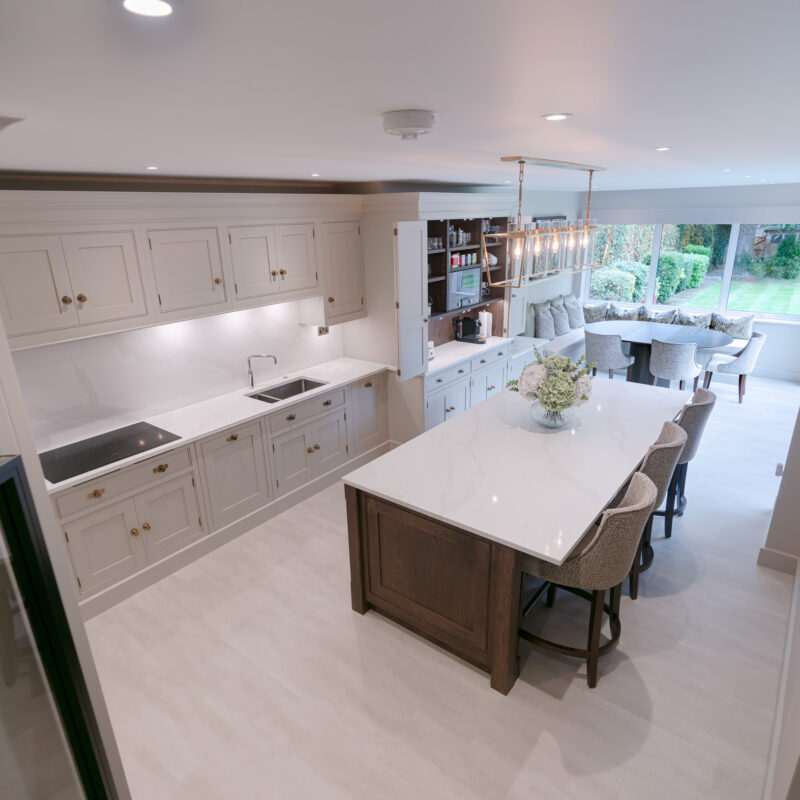
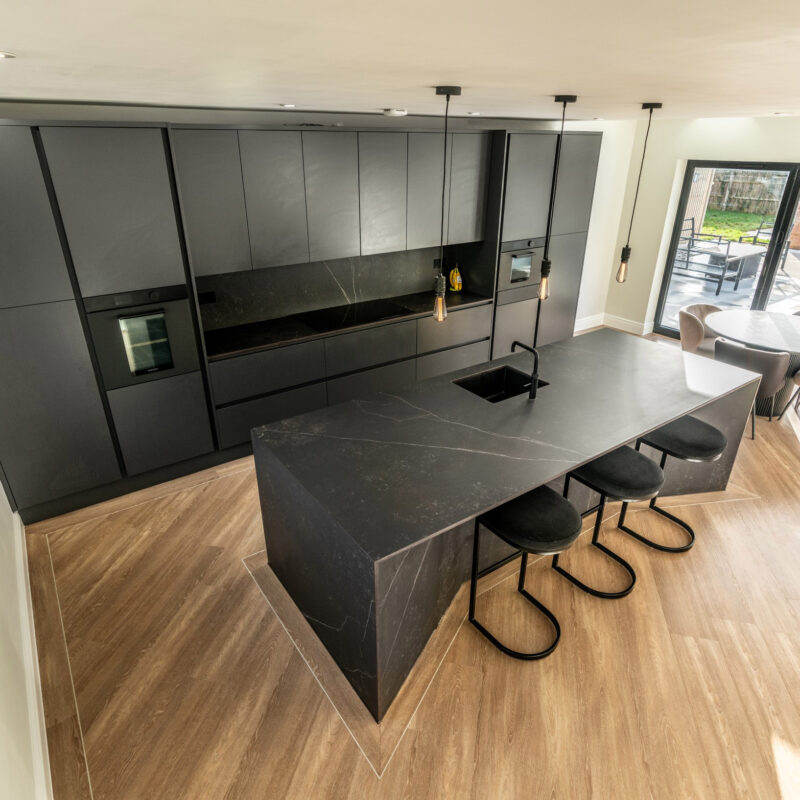
Today, the choices available to homeowners are extraordinary. Our Hertfordshire showroom is filled with stone surfaces in colours, textures and finishes ranging from polished marble-effect veining to raw concrete, brushed metal and natural stone. Come and see them for yourself.
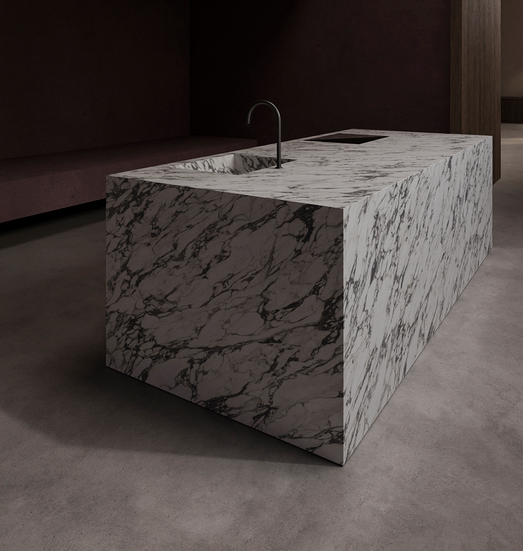
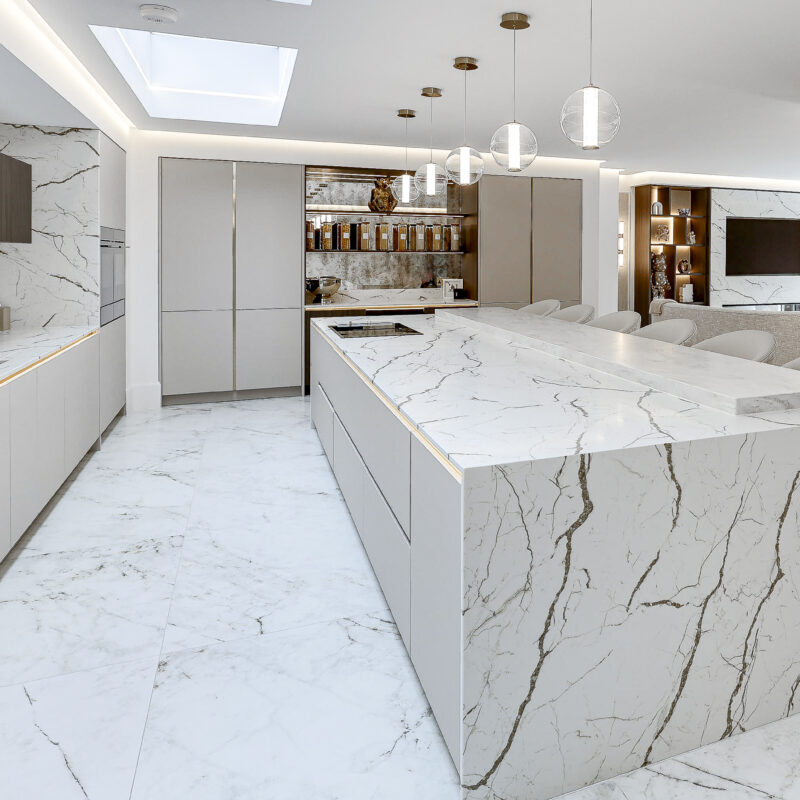
Fabrication has continued to advance, allowing us to produce mitred edges and bookmatched island panels on the CNC machine with precision that would have been unthinkable in 1986.
Some things have not changed. Our experienced team understands stone in a way that no machine can replicate. Technology has raised the bar, but it has not replaced the craft, our craft.
What’s Changed Over 40 Years of Stone
Looking back over four decades, the evolution of materials and fabrication has produced something special:
- Materials have improved enormously, from the rise of engineered quartz to the latest sintered stone. The change in worktops has given homeowners surfaces that meet the demands of a busy modern kitchen.
- Precision has transformed. Homeowners are enjoying seamless joins, perfect cutouts and mirror-finish edges that hand fabrication could not consistently deliver.
- The choice has exploded. Customers now have access to hundreds of colours and finishes across multiple material types, each with its own performance characteristics and price point.
We are proud to have been part of this industry through every stage of its evolution, and we look forward to bringing our expertise to the next forty years. From those early days with hand-cut granite to the modern surfaces we fabricate today, our commitment has always been the same and always will be: beautifully made worktops, fitted properly, by people who know their craft.
40 years of stone worktop fabrication, decade by decade:
- 1980s: Granite-only, hand-cut with diamond saws, hand-polished, cardboard templating
- 1990s: Engineered quartz arrives (Caesarstone, Silestone), wider colour palette and lower maintenance
- 2000s: CNC machines bring digital precision, laser templating replaces cardboard
- 2010s: Jumbo-format slabs (3m+), sintered stone (Dekton, Neolith) introduced
- 2020s: Mitred edges, bookmatched islands, hundreds of colours and finishes available

Frequently Asked Questions About How Kitchen Worktops Are Made
How are kitchen worktops made today?
Modern stone worktops are templated with a laser measuring system that captures the exact dimensions of the kitchen in minutes. The data is fed into CNC software that programmes a CNC machine to cut the slab, profile the edges and create cutouts for hobs and sinks to millimetre accuracy. Edges are polished mechanically, and finished worktops are fitted by experienced specialists. Materials range from natural granite and marble to engineered quartz and ultra-compact sintered stone.
What is the difference between granite, quartz and sintered stone?
Granite is a natural stone quarried from the earth, with each slab unique. Quartz is engineered from around 90 per cent crushed natural quartz bound with polymer resins, giving consistent colour and pattern. Sintered stone is made by compressing natural minerals at over 1,200°C, producing an ultra-compact, heat-resistant surface with virtually zero porosity. Each suits different priorities of look, durability and price.
How accurate is laser templating for kitchen worktops?
Laser templating is accurate to within 1mm. A laser measuring device scans the entire kitchen in minutes, capturing every wall, alcove and out-of-square angle. The data is transferred directly to the CNC cutting software, removing the human error that came with cardboard or MDF templates. The result is worktops that fit precisely first time, with seamless joins and perfect cutouts.
What is a CNC machine and why does it matter for worktops?
CNC stands for Computer Numerical Control. A CNC machine is a programmable cutting and polishing tool that follows digital instructions to shape stone with millimetre precision. For worktops, CNC matters because it produces consistent mitred edges, bookmatched veining, complex cutouts and decorative profiles that would take hours of hand work, while delivering a uniformly higher-quality finish. It is the single biggest change in worktop fabrication of the last 40 years.
How long has Cawdor Stone Gallery been making worktops?
Cawdor Stone Gallery has been supplying and fitting stone worktops since 1986, making 2026 our 40th year in the stone industry. Our award-winning Hertfordshire showroom opened to the public in 2003 and now displays full-size slabs of quartz, granite, marble, sintered stone and porcelain.
Related blogs
Celebrating 40 Years: The Cawdor Stone Gallery Story
From Quartz & Marble to Porcelain & Granite: The Most Luxurious Stones for Kitchen Islands
Uncover Granite with Cawdor Stone: The Most Frequently Asked Questions
Dekton Worktops vs Granite Worktops
Why Choose Cawdor Stone Gallery for Your Quartz & Granite Worktops?
Spring Kitchen Refresh: 5 Beautiful Quartz Worktop Ideas
The Reasons Why Quartz Will Still Be a Popular Kitchen Worktop in 2026
Sintered Surfaces: Why Choose This Surface for the Home?
What’s Changing in the World of Worktops
Are Porcelain Worktops Worth the Investment?
If you are planning a new kitchen and want to see the full range of stone worktops we offer, visit us at our Hertfordshire showroom. We will walk you through the options, show you real slabs, and help you find the right surface for your home. We look forward to welcoming you to Cawdor Stone Gallery.
About Cawdor Stone Gallery. A family-run stone specialist with 40 years of experience supplying and fitting quartz, granite, marble, sintered stone and porcelain worktops across Hertfordshire, Bedfordshire, St Albans, Welwyn Garden City, Harpenden, Stevenage, Barnet and the surrounding areas. Visit our showroom to see full-size slabs in person.