Quick answer: Living with quartz worktops means a few small daily habits: using trivets for hot pans, keeping a chopping board out to protect your knives, wiping spills quickly with warm soapy water, and avoiding bleach or abrasive cleaners. Quartz is non-porous and low-maintenance, but the polymer resin can scorch, so heat protection is the one habit that really matters.
When you start living with quartz worktops, no one hands you a manual. There is no induction course and no list of rules pinned to the fridge. Yet within a few weeks, every quartz owner finds themselves doing the same small things: gentle adjustments to how they cook, clean and care for their kitchen that happen so gradually they barely notice. After 40 years fitting quartz worktops across Hertfordshire, St Albans, Welwyn Garden City and Harpenden, we have seen every one of these habits form. If you are considering a quartz worktop for your kitchen, here is the honest version of daily life with one.
Why You Will Always Reach for a Trivet
This habit happens almost immediately. Before you invested in quartz, you probably put hot pans down wherever there was space, on top of a tea towel or directly on the worktop without a second thought. However, once you have a quartz worktop, a small collection of trivets and heat mats will appear near your cooker as if by magic.
Quartz is made of polymer resin and can be damaged by high heat when a roasting tin is put straight on it from the oven, or when a frying pan is lifted off a gas flame. When the resin is scorched or heat damage occurs, it cannot be reversed. As a result, you start reaching for a trivet, and within a week, it is completely automatic.
In most cases, households end up with two or three trivets that live permanently on the worktop near the hob. They take up no space at all and cost next to nothing. Ultimately, it is one of those habits that feels like a big deal before you have the worktop and like nothing at all once you do.
Sintered stone surfaces can handle hot pans directly without risk.

Can You Cut Directly on a Quartz Worktop?
This is another habit that arrives without invitation but with intention. Before the quartz worktops, the chopping board lived in a cupboard or propped up against the splashback, brought out when needed, but now it tends to stay out.
You can technically cut directly on a quartz surface without damaging the stone; however, it will blunt your blades remarkably quickly. After just a few weeks of cutting directly on quartz, you will notice your knives dragging rather than slicing cleanly. Consequently, the board comes out, stays out, and becomes part of the kitchen design.
Many homeowners now invest in a nice board as it is always on display. If you would like a chopping board made from the same quartz as your worktop, Cawdor Stone can do this. This is becoming a modern feature in the home today, and we have created many for our clients. They sit directly on your worktop, offering a place to cut, prepare and place hot items.
Why Cleaning Quartz Becomes a Daily Habit
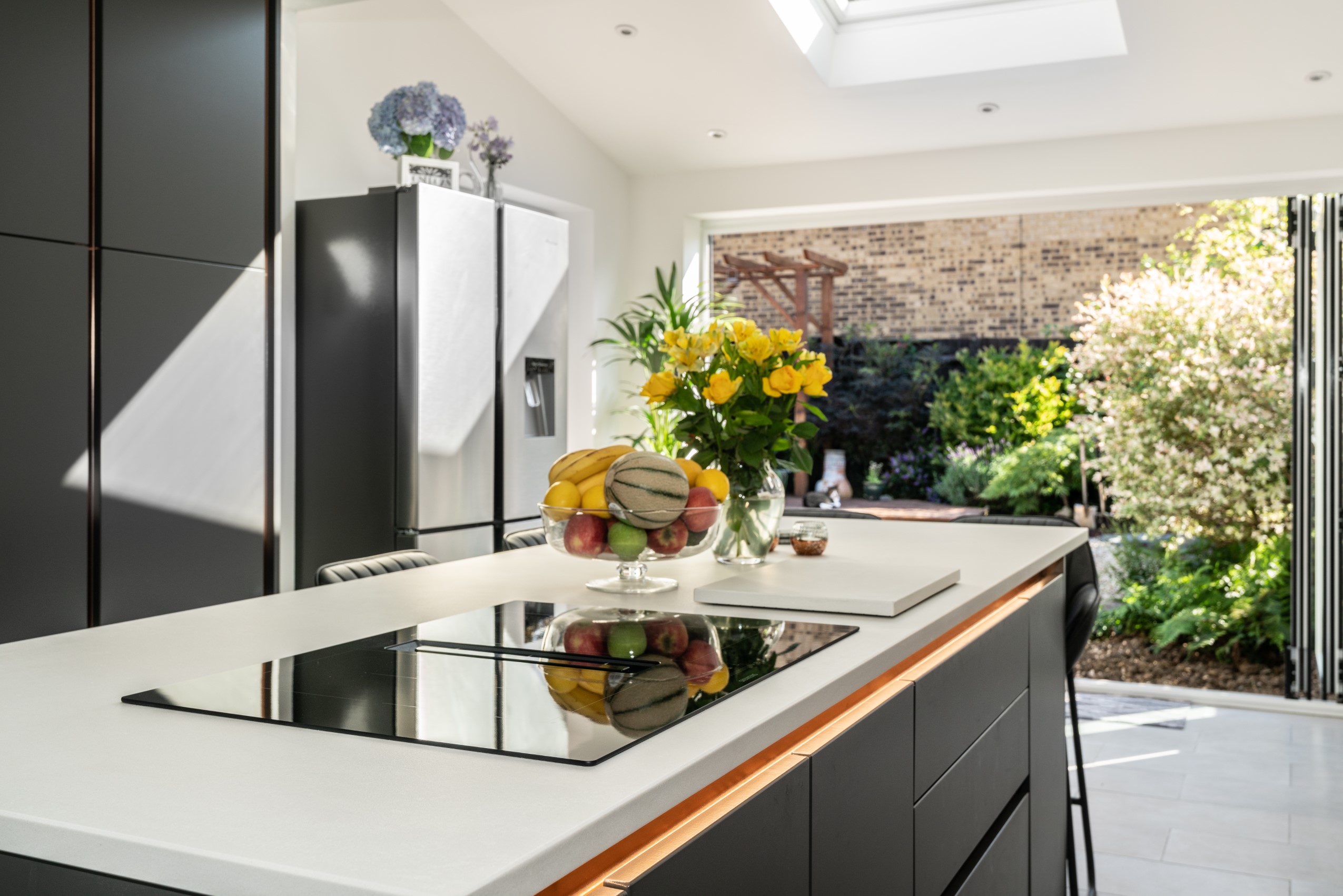
Cleaning quartz is so satisfying that you will start doing it more often than you ever anticipated. It wipes to a perfect finish in seconds, and all you need is a damp cloth, a drop of washing-up liquid and one pass across the surface. Because quartz is a non-porous worktop, there is no grain to trap crumbs, no pores to absorb spills, and no texture to catch grease. As a result, everything lifts straight off.
What happens next is that you find yourself wiping the worktop down after every activity. This two-second action makes the whole kitchen feel clean and ordered immediately. Surprisingly, some people describe it as the most therapeutic part of their day.

How Quartz Handles Spills (and the One Thing to Watch)
Interestingly, there is a paradox that comes with owning a quartz worktop. On the one hand, you stop panicking when someone knocks over a glass of red wine because you know the surface is non-porous and the liquid is not soaking in. On the other hand, you clean it up more promptly than you would on a laminate surface because you want to keep it looking immaculate.
A quartz surface is forgiving enough for a spill, yet beautiful enough that you do not want to leave it sitting there. In practice, quartz worktop owners tend to be quicker and more relaxed about spills.
That said, the only substances worth being genuinely mindful of are highly pigmented ingredients left on the surface for extended periods. One culprit is turmeric. If left on the surface overnight, it can leave a yellow tint that takes some effort to shift.

What Cleaning Products to Use on a Quartz Worktop
Before you chose to have quartz worktops, you might have had a cupboard full of specialist sprays, one for each element of the kitchen. With a quartz worktop, your cupboard gets a lot emptier, and all you need is warm water with a small amount of washing-up liquid, or a pH-neutral surface spray. For anything more stubborn, a non-abrasive cream cleanser will handle it. In short, there is no sealing, no polishing, no annual treatments, and no specialist products to remember to reorder. This is one of the key reasons quartz remains the best kitchen worktop for busy households across the UK.
Equally important is knowing what to avoid. You should keep away bleach-based sprays, abrasive scouring pads, solvent-based cleaners and anything with a very high or very low pH, as they can react with the worktop over time.
Quartz worktop care at a glance:
- Use trivets and heat mats for pans straight from the hob or oven
- Cut on a chopping board to protect both worktop and blades
- Clean with warm water and washing-up liquid, or a pH-neutral spray
- Avoid bleach, scouring pads, solvent cleaners and oven cleaner
- Do not leave turmeric, beetroot juice or red wine sitting overnight
- Skip annual sealing: quartz is non-porous and never needs it

You Will Start Spotting Quartz Everywhere
It becomes a habit, but a good habit. Once you have chosen your quartz worktop, you will automatically look at worktop surfaces everywhere you go. For instance, you might walk into your friend’s kitchen and immediately clock what their worktop is. Likewise, you will sit in your favourite bistro and find yourself running your hand across the counter, trying to work out if it is quartz or sintered stone.
This is entirely normal, and after four decades in the stone industry, we still do it ourselves.

The End-of-Day Quartz Wipe-Down Ritual
Finally, the habit that ties everything together is your own end-of-day ritual. You have loaded the dishwasher, made yourself a cuppa, and you give the worktop one final wipe. In many ways, it is the equivalent of plumping cushions before bed or closing all the cupboard doors. The fact that quartz rewards this so generously, looking flawless with minimal effort, is part of what makes it such a satisfying surface to live with day after day.

Frequently Asked Questions About Living with Quartz Worktops
Is quartz hard to look after?
No. Quartz is one of the lowest-maintenance kitchen worktops available. It is non-porous, never needs sealing, and cleans with warm soapy water. The only daily habit that really matters is using a trivet for hot pans, because the polymer resin binding the quartz can scorch above 150°C.
Can you put hot pans on quartz worktops?
No. Quartz worktops can be permanently damaged by direct heat. Always use a trivet or heat mat. If you regularly cook with very hot pans, sintered stone or porcelain worktops are a heat-tolerant alternative.
How do you clean a quartz worktop daily?
A damp cloth with a drop of washing-up liquid is all you need. For stubborn marks, use a non-abrasive cream cleanser. Avoid bleach, scouring pads and any cleaner with a very high or very low pH.
Do quartz worktops stain?
Quartz resists staining far better than natural stone because it is non-porous. The exceptions are highly pigmented substances such as turmeric, beetroot juice and hair dye left on the surface for hours. Wipe these straight away to be safe.
How long do quartz worktops last?
With basic care (a trivet, a chopping board, regular wiping) a quartz worktop will look as good in 20 years as the day it was installed. Cawdor Stone Gallery has fitted quartz worktops across Hertfordshire that are still flawless after two decades.
Related blogs
Can Quartz Worktops Handle Everyday Kitchen Life?
Refresh Your Kitchen for Spring with Beautiful Quartz Surfaces
The Reasons Why Quartz Will Still Be a Popular Kitchen Worktop in 2026
Frequently Asked Questions on the Popular Material – Quartz
Why A Calacatta Gold Quartz Worktop?
If you are thinking about investing in a quartz worktop and wondering how it will fit into your daily life, come and see the surfaces for yourself at our showroom. At Cawdor Stone Gallery, we carry an extensive range of quartz worktops from Silestone, Caesarstone, Artemistone, Technistone, CRL Quartz and many other brands. We will talk you through which suits the way you use your kitchen, helping you find the best kitchen worktop for your home and lifestyle.
With 40 years in the stone industry, we know how these surfaces live, not just how they look in a brochure.
About Cawdor Stone Gallery. A family-run stone specialist with 40 years of experience supplying and fitting quartz, granite, marble, sintered stone and porcelain worktops across Hertfordshire, St Albans, Welwyn Garden City, Harpenden, Stevenage and the surrounding areas. Visit our showroom to see full-size slabs in person.