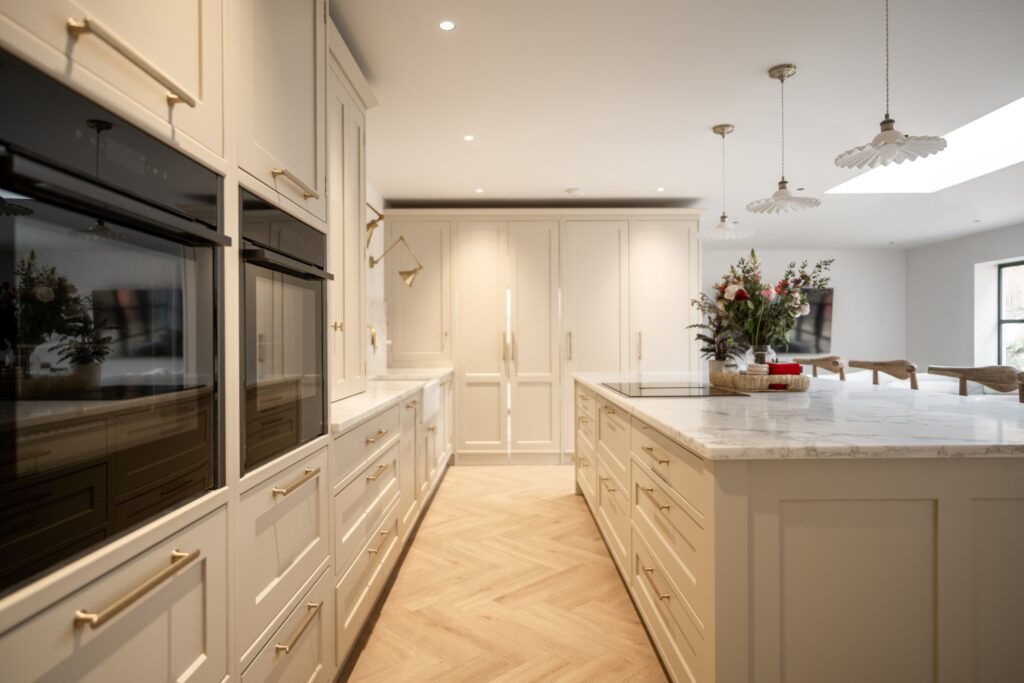
Quick answer: Yes, quartz worktops are highly durable and well-suited to busy family kitchens. They are non-porous, scratch-resistant, hygienic and easy to clean. The two things to watch are direct heat above 150°C (use a trivet) and highly pigmented substances like turmeric left overnight (wipe spills as you go). With basic care, a quartz worktop will look as good in five years as the day it was fitted.
You have done the research, visited the showroom, and shortlisted a quartz worktop. The colours are beautiful, the surface feels incredible, and everything you have read suggests it is low-maintenance and hard-wearing. But one question still lingers: are quartz worktops durable enough to handle the reality of a busy kitchen, where homework, spills, hot pans and the daily chaos of family life all play out on one surface? After 40 years fitting quartz worktops in family homes across Hertfordshire, St Albans, Welwyn Garden City and Stevenage, here is the honest answer.
We all imagine a kitchen that is “clean and tidy”, but we forget about the real life of a kitchen. The one where the kids do their homework at the island, the slow cooker lives permanently in the corner, somebody spills coffee at least three times a week, and the worktop doubles as a dumping ground for schoolbags, car keys and the post.
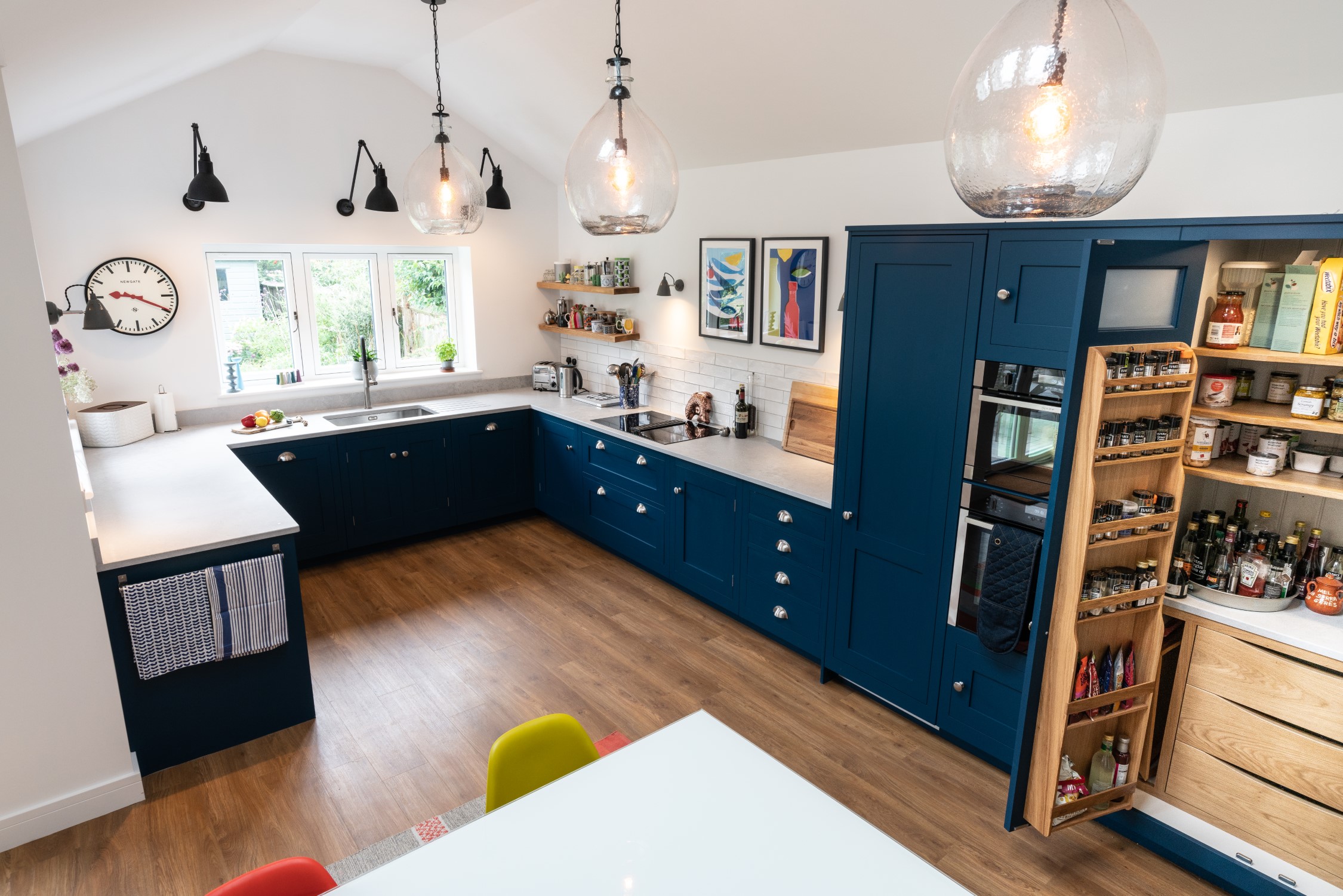
Everyday Chopping and Food Prep: Do I Need a Board?
This has to be one of the most common questions homeowners ask: can I cut directly on a quartz worktop? Technically, quartz is hard enough that a kitchen knife will not damage the surface. In practice, though, cutting directly on quartz is not recommended, and not because of the worktop.
Quartz is a strong material and will actually blunt your knives remarkably quickly. You will also risk fine scratches over time that, while not structurally significant, can dull the appearance of a polished surface.
In reality, most busy kitchens have a chopping board that lives on the worktop or is stored in a drawer. And if you do accidentally drag a knife across the surface while carving a chicken or slicing bread in a hurry, you are not going to gouge or crack the stone.
Can Quartz Worktops Take Heat?
Quartz worktops are made from around 90 to 94 per cent natural quartz bound with polymer resin, and it is those resins that make them vulnerable to heat. At temperatures above 150°C, the resin can discolour, scorch or in extreme cases, crack.
Placing a boiling kettle back down on the surface after pouring is not going to cause the problem, nor is a warm plate or mug of tea. However, putting a roasting tin straight from a 220°C oven onto bare quartz, or leaving a hot frying pan sitting on the surface for several minutes, is a genuine risk. The damage might not be instant, but if continuous, the resin will discolour.
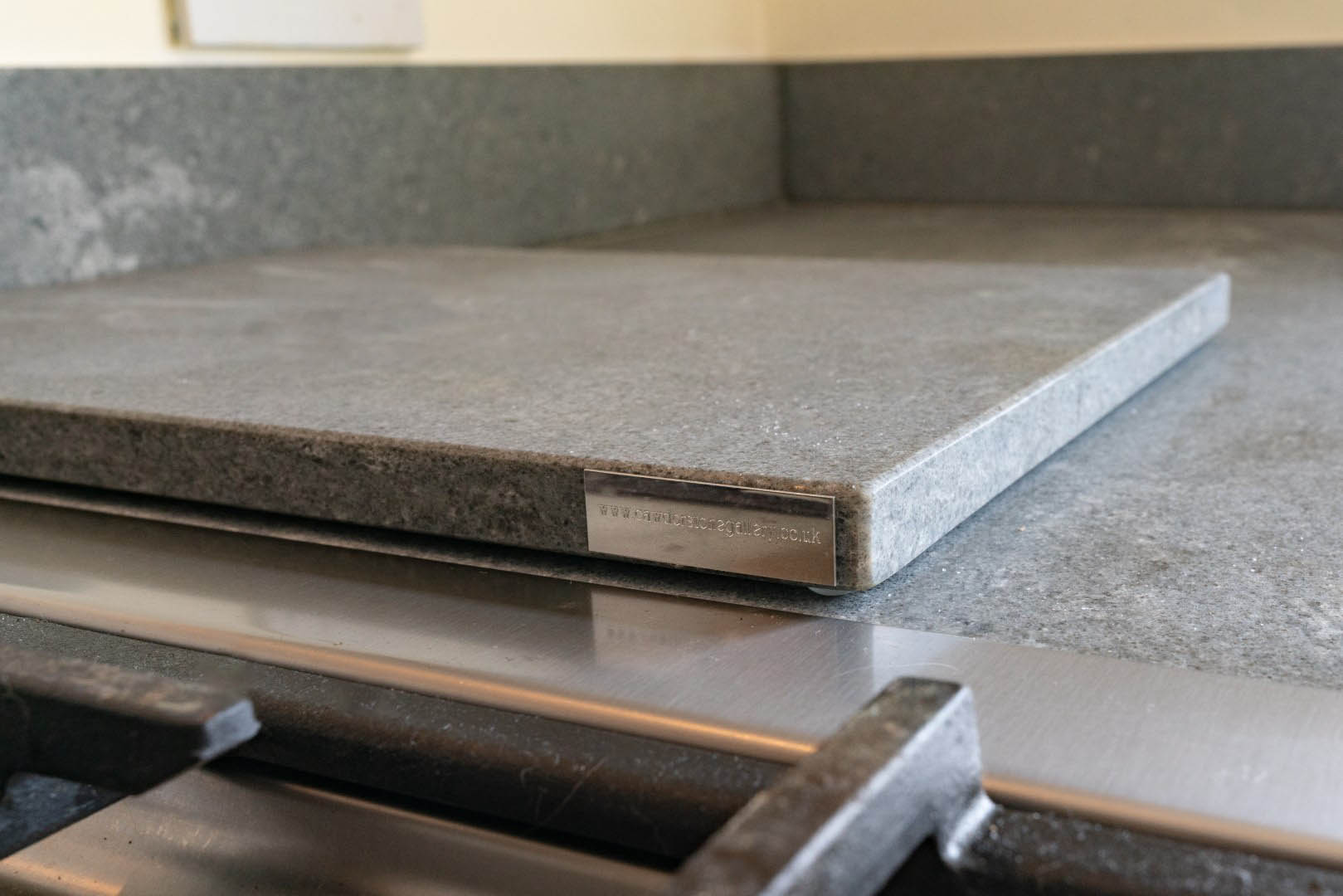
The simple answer we always tell our clients is to use trivets or heat mats for anything coming directly from the hob or the oven. You can even choose these in the same stone as your worktop to create a matching quartz board.
If you are looking for a surface that handles heat differently, it is worth considering a sintered stone surface.
What Stains Mark a Quartz Worktop?
Quartz is non-porous, which means liquids do not soak into the surface the way they can with granite or marble. It is more stain-resistant than natural stone; however, stain-resistant is not the same as stain-proof, and this distinction matters.
In day-to-day use, the vast majority of spills wipe away without a trace. The everyday liquids of coffee, tea, juice, milk and cooking oil will not cause lasting damage if cleaned up within a reasonable time. Even red wine, the dreaded spill, comes off a quartz surface with a cloth and some warm soapy water.
Where things get more complicated is with highly pigmented or chemical substances left sitting on the surface for extended periods. Turmeric is the classic example. If a turmeric-heavy sauce is left on a light quartz surface overnight, it can leave a yellow tint that takes some effort to remove. Strong chemical cleaners, particularly those containing bleach or high alkaline levels, can also affect the resin over time.
The takeaway is to clean spills as you go. Repeat this every time and your quartz worktops will look the same in year five as they did on the day they were fitted.

Is Quartz Hygienic and Family-Friendly?
Your worktop is not just a food preparation surface. It is a desk, a craft table, a breakfast bar, a laptop station and a place for the children to do their homework. Quartz handles everything, from pens and pencils to paint and glue. You only need warm water and a gentle scrub to remove most of it.
The surface is also hygienic, which matters when children are involved. Because quartz is non-porous, bacteria and mould cannot penetrate the surface. A wipe-down with a damp cloth and a mild cleanser is all it takes to keep things sanitary.
For families with young children, this combination of durability, easy cleaning and hygienic properties is one of the strongest practical arguments for quartz. It is a surface you do not need to worry about, which is perfect for busy households.
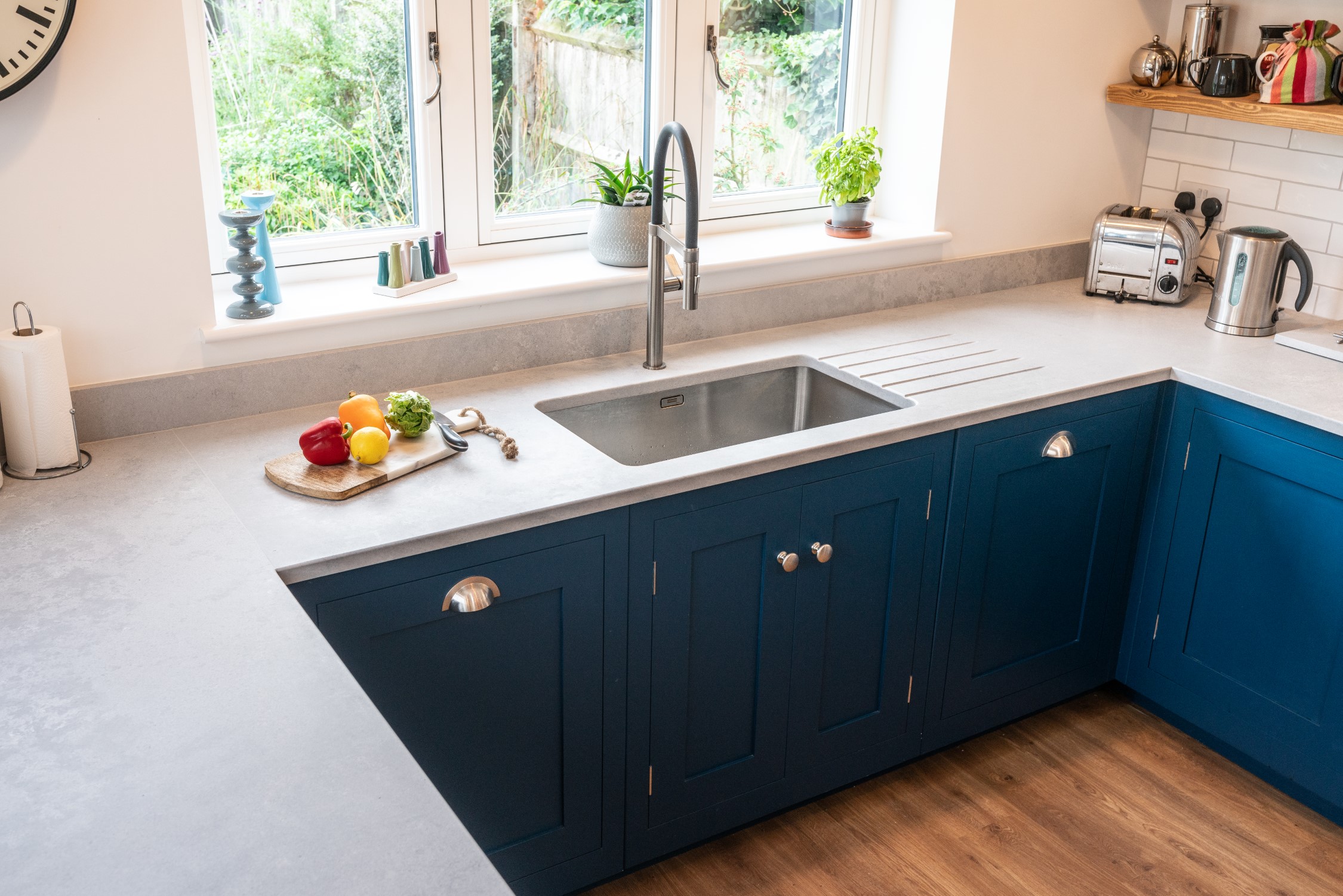
Are Quartz Worktops Scratch-Resistant?
Quartz scores around seven on the Mohs hardness scale, which puts it comfortably above most materials that will touch it in the kitchen. Knives, ceramic plates, pans and small appliances will not scratch the surface under normal use.
That said, quartz is not indestructible. Dragging a heavy cast-iron pan across the surface, or sliding a ceramic pot with a rough, unglazed base, can leave fine marks on a polished finish. Matte and textured surfaces disguise minor surface wear far better than a glossy polish, which is worth considering if you know how heavy daily life gets in your kitchen.
How Easy Are Quartz Worktops to Clean?
One of the most appealing aspects of quartz is how little maintenance it requires. There is no sealing, no specialist products, no annual treatments, just a beautiful surface to enjoy and work on for years.
Your daily cleaning routine is simple: a wipe-down with a soft cloth, warm water and a small amount of washing-up liquid.
Quartz worktop durability at a glance:
- Hardness: around 7 on the Mohs scale (harder than knives and most kitchenware)
- Heat tolerance: safe up to roughly 150°C, always use a trivet for hot pans
- Stain resistance: non-porous, but wipe pigmented spills (turmeric, beetroot, red wine) within hours
- Scratch resistance: excellent under normal use; matte finishes hide minor wear best
- Hygiene: non-porous, so bacteria and mould cannot penetrate
- Maintenance: no sealing, no specialist products, just warm soapy water
So, Are Quartz Worktops Worth It for a Busy Kitchen?
Yes. Stick to the simple habits above and a quartz worktop will handle everything a busy household throws at it and still look beautiful years later. This surface fits around the way you live, and that is why it remains the most popular worktop material in UK kitchens.
Frequently Asked Questions About Quartz Worktop Durability
Are quartz worktops durable?
Yes. Quartz worktops are one of the most durable kitchen worktop surfaces available. They score around 7 on the Mohs hardness scale, are non-porous, hygienic and resistant to staining, scratching and chipping under normal use. With basic care, a quartz worktop will last 20 years or more without losing its finish.
Can you cut directly on a quartz worktop?
Technically yes, but it is not recommended. Quartz is harder than most kitchen knives and will blunt your blades quickly. Repeated cutting can also leave fine scratches on a polished surface. A chopping board protects both the worktop and your knives.
Will hot pans damage a quartz worktop?
Yes, if placed directly on the surface. Quartz is bound with polymer resin that can scorch, discolour or crack at temperatures above 150°C. A roasting tin from a 220°C oven or a hot frying pan should never go straight on the worktop. Always use a trivet or heat mat. Sintered stone is a heat-tolerant alternative if you regularly cook with very hot pans.
Do quartz worktops scratch easily?
No, quartz is highly scratch-resistant under normal kitchen use. Knives, ceramic plates and small appliances will not damage the surface. Heavy cast-iron pans dragged across the worktop, or rough unglazed ceramic bases, can leave fine marks on a polished finish. Matte and textured finishes disguise minor wear better than glossy polish.
Are quartz worktops good for family kitchens?
Yes. Quartz is one of the best worktops for family kitchens because it is non-porous (no bacteria or mould penetration), hard-wearing, easy to wipe clean, and forgiving of spills. With a trivet for hot pans and quick clean-up of pigmented spills, a quartz worktop will withstand years of homework, cooking and daily family life.
Related blogs
Living with Quartz Worktops: 7 Habits Every Owner Picks Up
40 Years in Stone: How Worktop Fabrication Has Changed Since 1986
What’s Changing in the World of Worktops
The Reasons Why Quartz Will Still Be a Popular Kitchen Worktop in 2026
Why Calacatta Quartz is a Designer’s Favourite for High-End Homes
Frequently Asked Questions on the Popular Material – Quartz
Are you weighing up whether quartz is right for your kitchen? Come and see it for yourself at our Hertfordshire showroom. We have many quartz surfaces to explore, including an array of colours, finishes and thicknesses to suit your kitchen. With 40 years in stone, we have helped thousands of homeowners across St Albans, Welwyn Garden City, Harpenden and Stevenage make this decision, and we would love to help you, too.
About Cawdor Stone Gallery. A family-run stone specialist with 40 years of experience supplying and fitting quartz, granite, marble, sintered stone and porcelain worktops across Hertfordshire, St Albans, Welwyn Garden City, Harpenden, Stevenage and the surrounding areas. Visit our showroom to see full-size slabs in person.