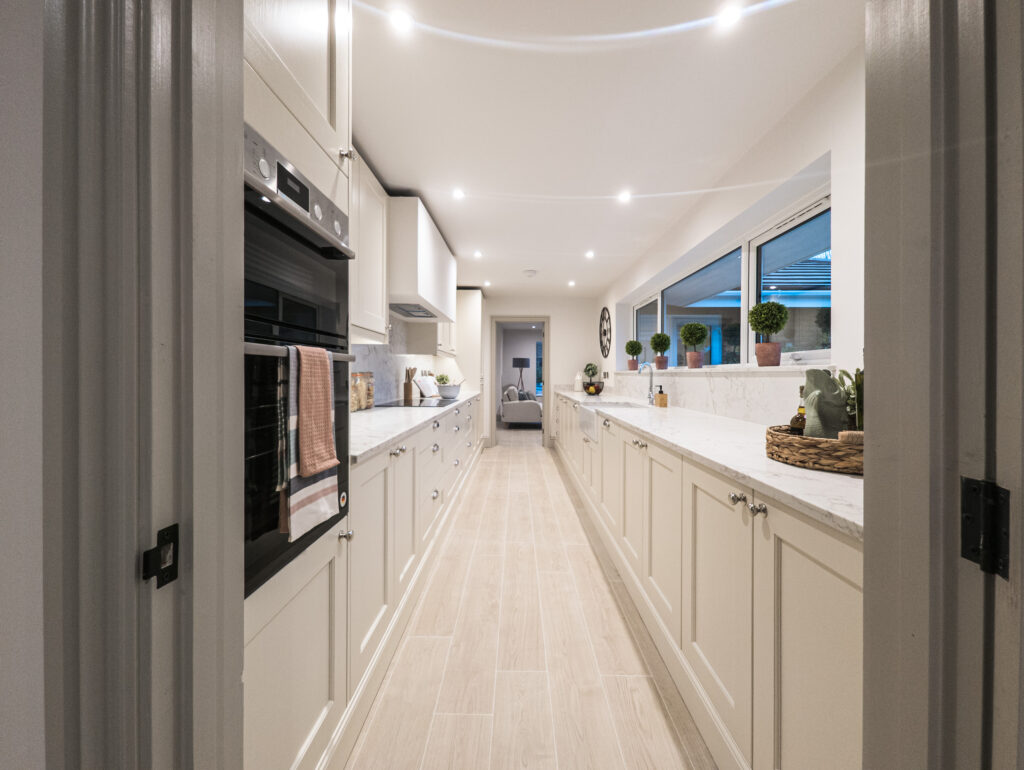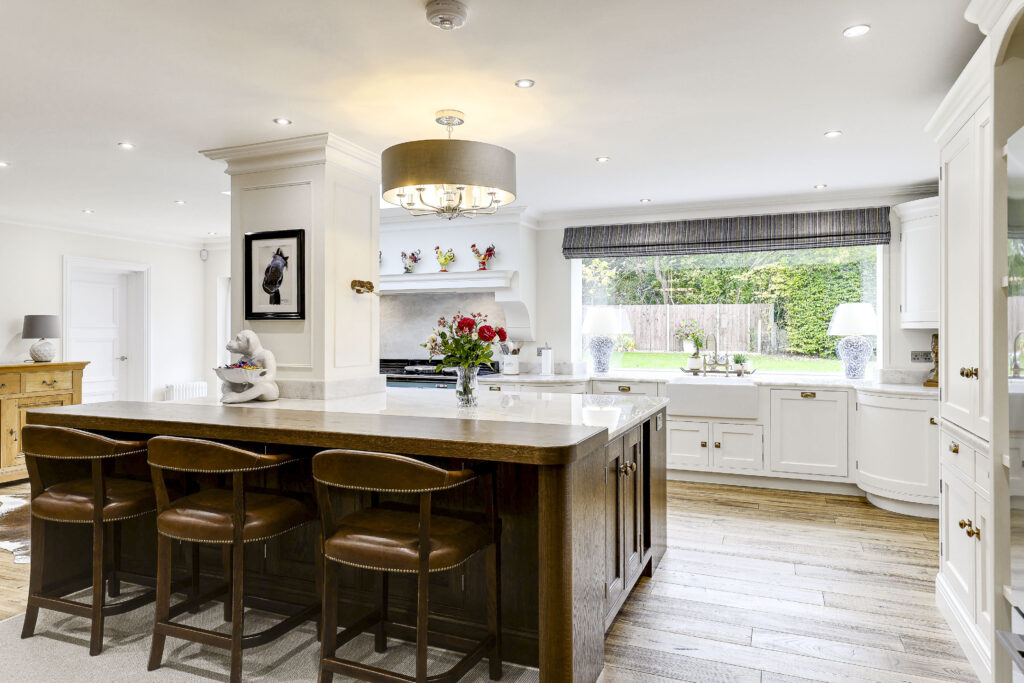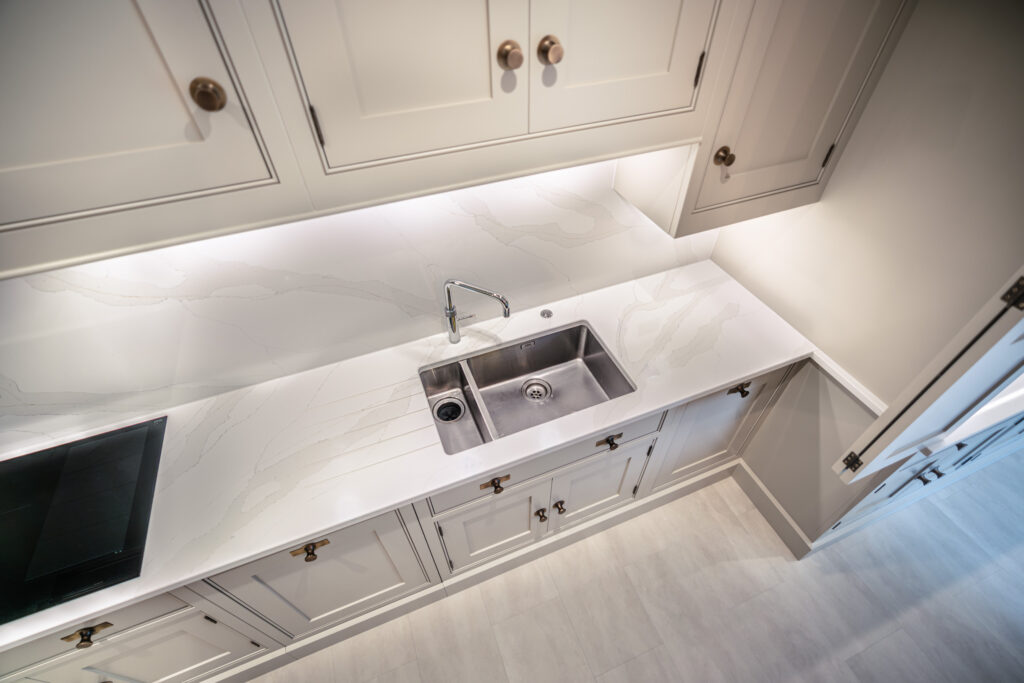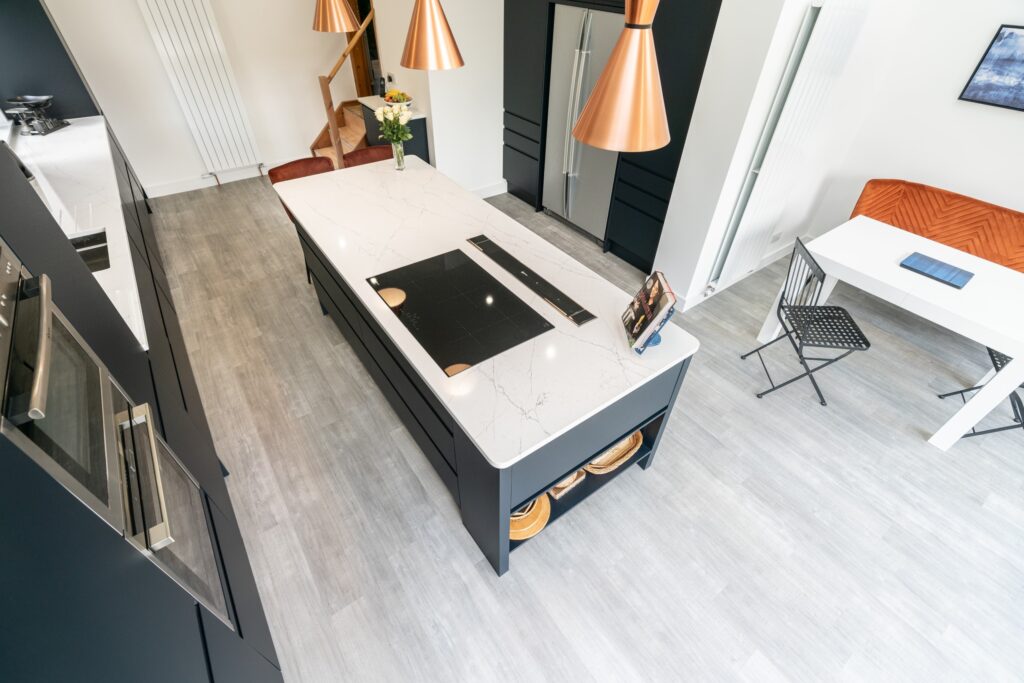
Quick answer: Yes, you can put hot pans on sintered stone worktops. Sintered stone is fired at over 1,200°C during manufacturing, so a saucepan from the hob or a roasting tin from a 250°C oven will not scorch, crack or discolour the surface. Brands like Dekton, Neolith, Laminam and Ascale are specifically engineered to resist both sustained heat and thermal shock, which is why sintered stone is a popular choice for keen cooks.
If it is now time to research worktop materials for a new kitchen, heat resistance is probably high on your list. Nobody wants to reach for a trivet every time they drain pasta or pull a tray out of the oven. So, can you put hot pans on sintered stone? The short answer (and the one most people want quickly) is yes, and it is one of the biggest reasons homeowners are choosing sintered stone over quartz and granite.
In this guide, we explain exactly why sintered stone handles heat so well, how it compares to other popular surfaces, and what you should still be mindful of in day-to-day use, drawn from 40 years of fitting stone worktops in homes across Hertfordshire, Bedfordshire, St Albans, Welwyn Garden City and Harpenden.
What Is Sintered Stone?
The first question we get asked a lot is: “What is sintered stone?” Sintered stone is an engineered surface made from natural minerals, including silica, feldspar and glass-based oxides. These raw materials are subjected to extreme pressure and high temperatures of above 1,200°C during manufacturing. This process mimics the way natural stone forms over thousands of years, but compresses it into hours.
The result is an ultra-compact slab with virtually zero porosity. Brands like Dekton, Neolith, Laminam and Ascale all use variations of this sintering process, and it is this manufacturing method that gives the material its remarkable heat resistance.
Can You Put Hot Pans Directly on Sintered Stone?
This is the question we want to answer for you. Yes, sintered stone worktops can withstand direct contact with hot pans, baking trays and oven dishes without scorching, cracking or discolouring. Because the material has already been fired at temperatures far exceeding anything a domestic kitchen can produce, a hot saucepan straight from the hob is not going to cause serious damage.
Dekton, for example, has been tested to withstand direct flame and thermal shock, which is why it is also used for outdoor kitchens, BBQ surrounds, and even building facades exposed to intense sunlight.

How Does Sintered Stone Compare to Other Worktop Materials for Heat Resistance?
Here is how sintered stone stacks up against the main contenders.
Sintered Stone vs Quartz
Quartz worktops, including brands like Silestone, Caesarstone and CRL Quartz, are made with around 90 to 94 per cent natural quartz bound together with polymer resins. It is those resins that can cause heat-related problems, such as discolouration, scorching and even cracking. This means you should always use a trivet or heat mat with quartz surfaces.
Sintered stone contains no resin. That single difference is what makes it dramatically more heat-resistant than any quartz worktop on the market.
Sintered Stone vs Granite
Natural granite has good heat tolerance and will not scorch under a hot pan in normal kitchen use. However, granite is a natural material with internal fissures and variations, and sudden, extreme temperature changes (known as thermal shock) can in rare cases cause cracks.
Sintered stone is engineered to resist thermal shock as well as sustained heat, giving it a slight edge in this area.
Sintered Stone vs Porcelain Worktops
Large-format porcelain slabs are sometimes compared to sintered stone, and while they also handle heat reasonably well, the manufacturing process is different. Sintered stone is pressed and fired at higher pressures, resulting in a denser, less porous surface. For heat resistance specifically, sintered stone is the stronger performer.
Heat resistance by worktop material, at a glance:
- Sintered stone (Dekton, Neolith, Laminam, Ascale): exceptional. Hot pans direct from the hob or oven, fully thermal-shock resistant, suitable for outdoor kitchens.
- Granite: good. Hot pans are usually fine, but a small risk of cracking under sudden thermal shock.
- Quartz (Silestone, Caesarstone, Artemistone, etc.): poor. Polymer resin can scorch above 150°C, always use a trivet.
- Porcelain: very good. Denser than ceramic tile, slightly less heat-tolerant than sintered stone.
- Marble: poor for hot pans. Will scorch and stain, always use a trivet.
What About Thermal Shock?
Thermal shock occurs when a surface experiences a rapid temperature change. This can be as simple as placing a pan of boiling water directly onto a cold worktop. Some materials can crack under this stress.
Sintered stone is specifically engineered to resist thermal shock. Dekton and Neolith both test for this during manufacturing, and it is one of the key selling points of the material. You can take a roasting tin straight from a 250°C oven and place it on your worktop without concern.
Should You Still Be Careful?
Just because sintered stone is extremely heat-resistant, it is still worth keeping a few things in mind.
Prolonged contact with very hot items, such as leaving a cast iron pan heated on a high flame sitting on the surface for an extended period, is unlikely to cause damage, but is not something manufacturers specifically test for in domestic settings. In practice, this is rarely an issue because pans cool down quickly once removed from the heat source.
It is also worth noting that heat resistance is about the stone itself. If your worktop has been installed with a surface-mounted hob or integrated sink secured by adhesive, the adhesive around those joints may have different tolerances. We will advise on this during installation.

Why Heat Resistance Matters When Choosing a Kitchen Worktop
Heat resistance might seem like a small detail when you are comparing colours, patterns and prices, but it has a real impact on how your kitchen lives day to day.
Choosing a stone that withstands extreme heat gives you the freedom to cook without constantly reaching for trivets and mats. For busy households, keen cooks and anyone who wants a worktop that works as hard as they do, this is a genuine advantage.

Frequently Asked Questions About Hot Pans and Sintered Stone
Can you put hot pans directly on sintered stone?
Yes. Sintered stone is fired at over 1,200°C during manufacturing, so saucepans, frying pans and roasting tins straight from the hob or oven will not damage the surface. Brands like Dekton, Neolith, Laminam and Ascale are tested for both sustained heat and thermal shock, which is why sintered stone is one of the most heat-tolerant worktop materials available.
What temperature can sintered stone withstand?
Sintered stone can withstand temperatures well in excess of typical domestic cooking. Dekton, for example, is tested to withstand direct flame, which is why it is used for outdoor kitchens and BBQ surrounds. A roasting tin from a 250°C oven placed straight onto a sintered stone worktop will not scorch, crack or discolour the surface.
Is sintered stone better than quartz for heat?
Yes, significantly. Quartz worktops contain 6 to 10 per cent polymer resin that can scorch, discolour or crack at temperatures above 150°C, so quartz always requires a trivet. Sintered stone contains no resin and is fired at over 1,200°C during manufacture, so it handles direct contact with hot pans without any risk of damage.
Can sintered stone crack from thermal shock?
Sintered stone is specifically engineered to resist thermal shock. Brands like Dekton and Neolith test for this during manufacturing, and it is one of the key selling points of the material. Placing boiling water or a hot pan directly onto a cold sintered stone worktop will not cause cracking, unlike some natural stones.
Which sintered stone brand is best for heat resistance?
All major sintered stone brands (Dekton, Neolith, Laminam and Ascale) deliver exceptional heat resistance because they share the same fundamental sintering process. Dekton is the most widely tested for extreme conditions including outdoor use and direct flame, but for indoor kitchen use, all four brands handle hot pans, oven trays and thermal shock without issue. The choice usually comes down to colour, finish and aesthetic.
Related blogs
Are Quartz Worktops Durable Enough for a Busy Kitchen?
Why Choose XTONE Sintered Surfaces for Your Next Project?
Sintered Surfaces: Why Choose This Surface for the Home?
What’s Changing in the World of Worktops
Why Dekton is the Ideal Surface for Busy Kitchens
The Frequently Asked Questions About Dekton Worktops
At Cawdor Stone Gallery, we specialise in sintered stone surfaces from a range of manufacturers. If you would like to see and feel the material in person, compare finishes, and talk through your project, you are welcome to visit our Hertfordshire showroom. We have been working with stone for over 40 years and can help you choose the right surface for your kitchen.
About Cawdor Stone Gallery. A family-run stone specialist with 40 years of experience supplying and fitting quartz, granite, marble, sintered stone and porcelain worktops across Hertfordshire, Bedfordshire, St Albans, Welwyn Garden City, Harpenden, Stevenage, Barnet and the surrounding areas. Visit our showroom to see full-size slabs in person.