When you have just purchased your perfect worktops you want to protect them from cooling down tasty bakes and hot pots and pans. A simple kitchen accessory such as a trivet or a worktop saver can become the most used accessory in the household.
Quick answer: what is a trivet?
A trivet is a small stand, usually with three or four legs, that raises a hot dish above the surface beneath it so heat cannot transfer directly. A worktop saver does a similar job but is a flat board, often glass or stone, which doubles as a food preparation surface. Both protect against heat, scratches and staining. They matter most on quartz, which is heat-sensitive and can discolour or crack under a hot pan, and least on sintered stone such as Dekton, which takes direct heat without damage.
Do you love hosting a classy dinner party with your family and friends? Are you a lover for baking? If you are trying to find the perfect way to keep your home fresh and beautiful for guests and yourself, as well as your kitchen worktops, then trivets and savers are ideal. They are a decorative piece to your kitchen and dining table with the benefits of protecting the surfaces from heat, scratches and overall damage.
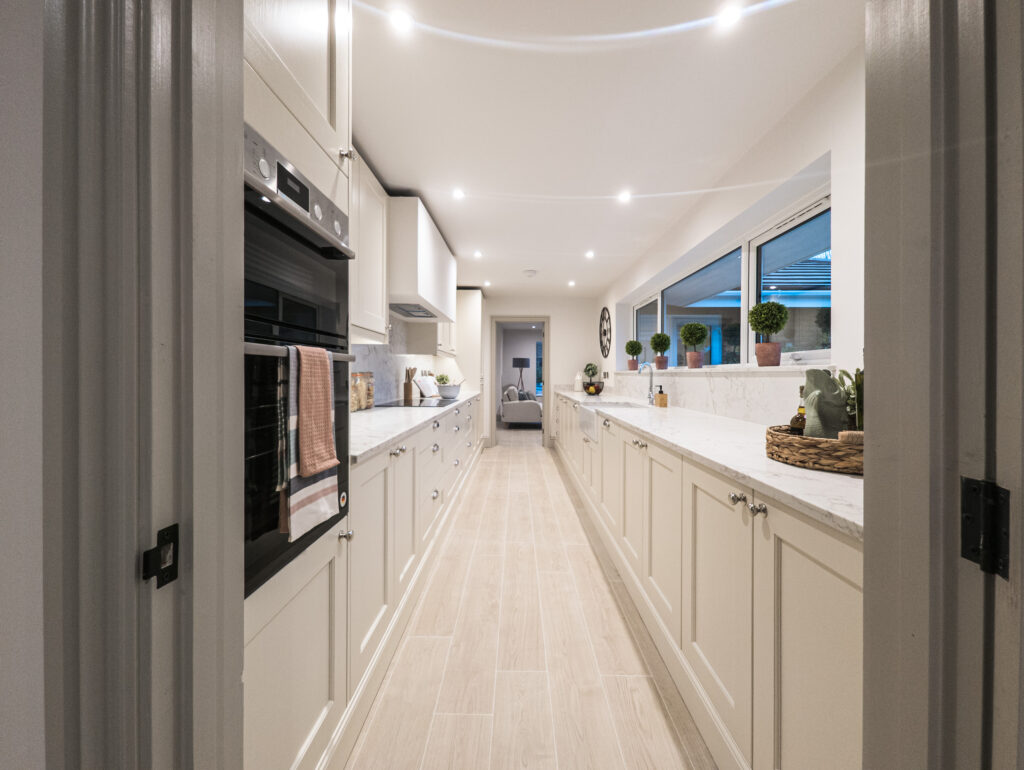
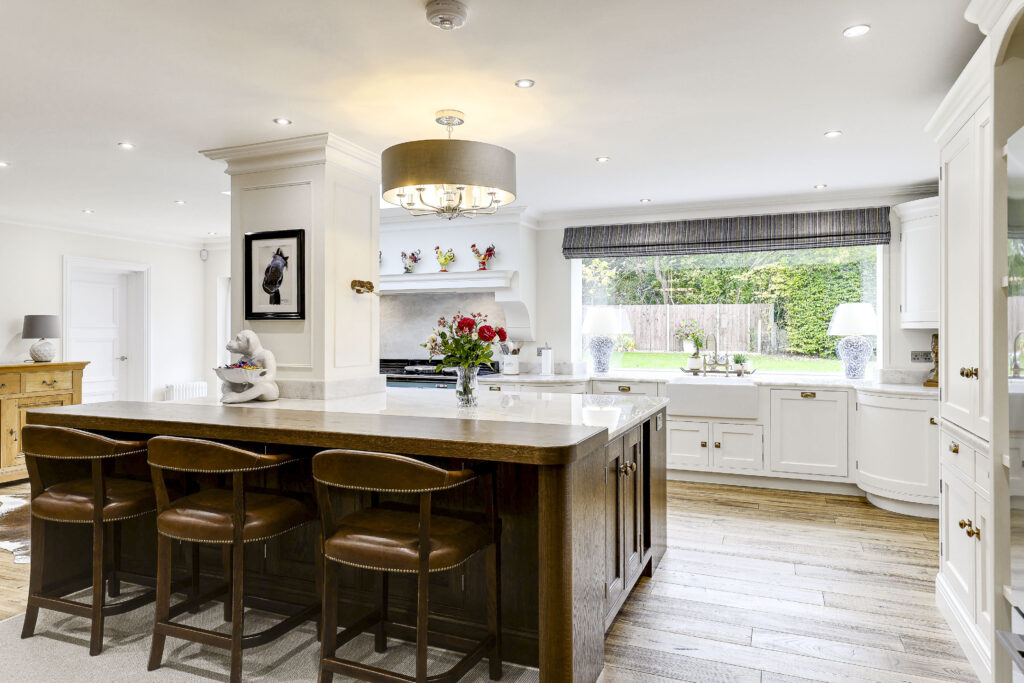
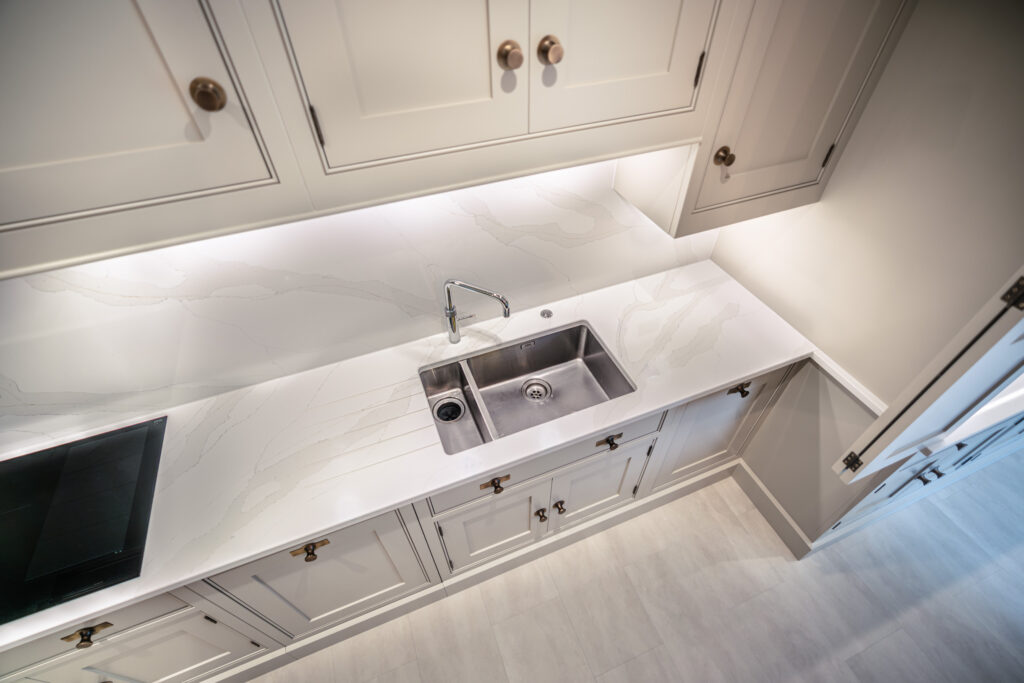
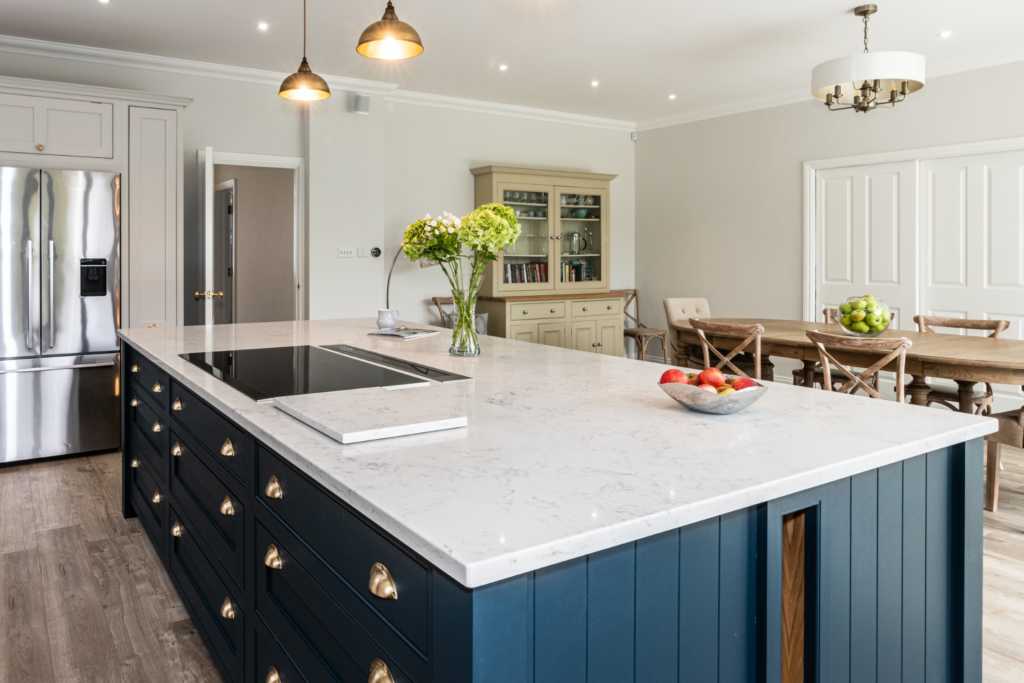
This beautiful home in Hitchin was completed with the Carrara quartz, a white-based worktop with fine, subtle veins flowing through the surface. To protect the worktops our client opted for a worktop saver made from the same quartz.
Trivets
A trivet is an impressive object that is placed between a serving dish or bowl on a worktop or dining table to protect it from heat damage. The purpose of this handy accessory is to keep the heat raised up from a hot surfaced dish to protect the surface it is placed on to. “Trivet” comes from Latin tripes meaning “tripod”. The reason for this terminology is with regards to the structure a tripod is designed with three legs to support but may become four-legged. This kitchen basic is a smart gadget, that is available in different shapes, sizes, colours and designs.
It can also be used for many different things such as a fun and modern centrepiece for a beautiful bouquet of flowers or a pretty house plant. These useful kitchen accessories add an extra special touch to the tops the prepping and eating areas, as well as a shelf or the window sill. It can be easily upgraded when you fancy a new style, changing within the different seasons.
Trivets come in a range of materials, with them being made from cast iron and heavy metals many years ago. As the years have gone on they have been produced in other materials. Add a natural look to your kitchen with a wood or cork trivet, implementing them into your tastes and style. They are lightweight and simple, serving a purpose of insulating the worktop or table from heat.
Worktop Savers
A worktop saver is a highly versatile board that is used for a variety of tasks in the kitchen. The aim of these is to satisfy food preparation as well as protecting the work surfaces from heat, scratches and damage as previously mentioned. They can brighten up the kitchen with their range of materials, colours, designs, shapes and sizes. A tough glass worktop saver can be doubled as a heat mat or serving board.
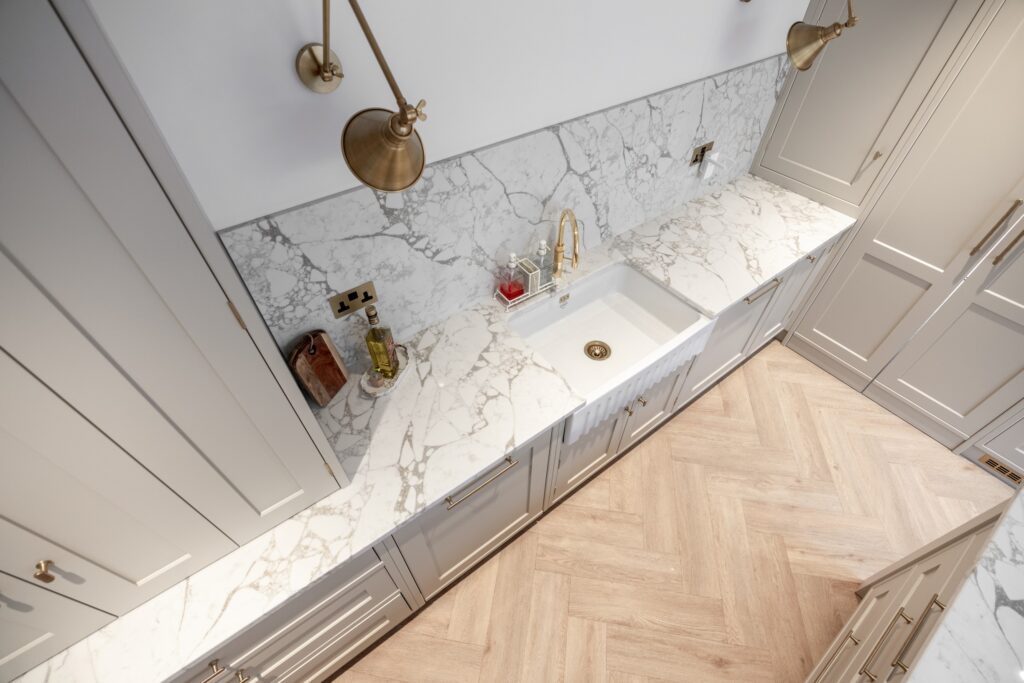
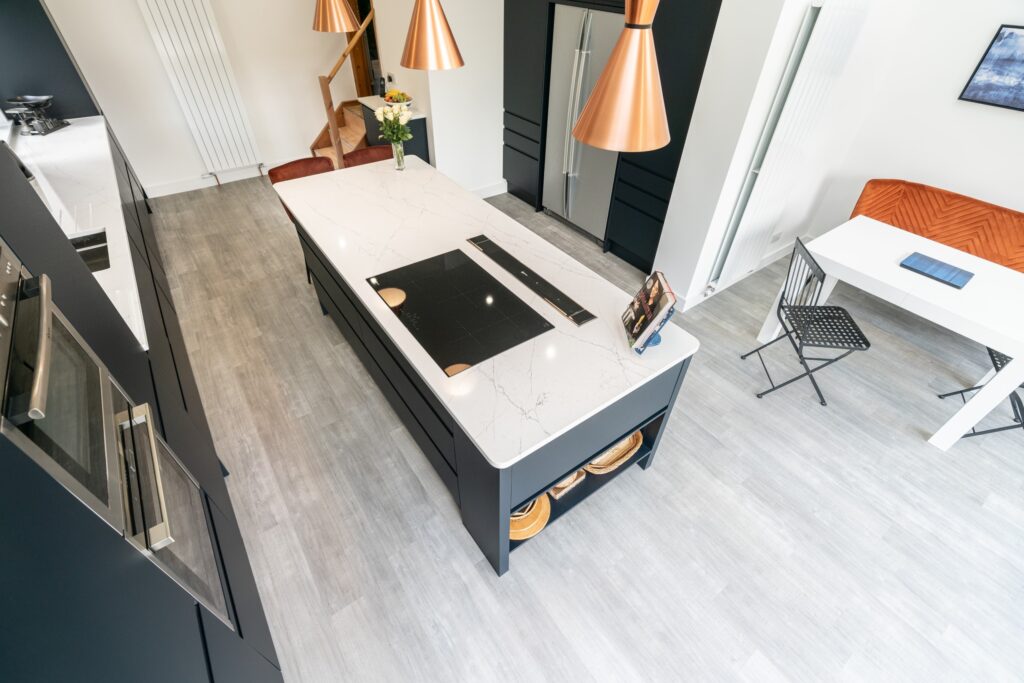
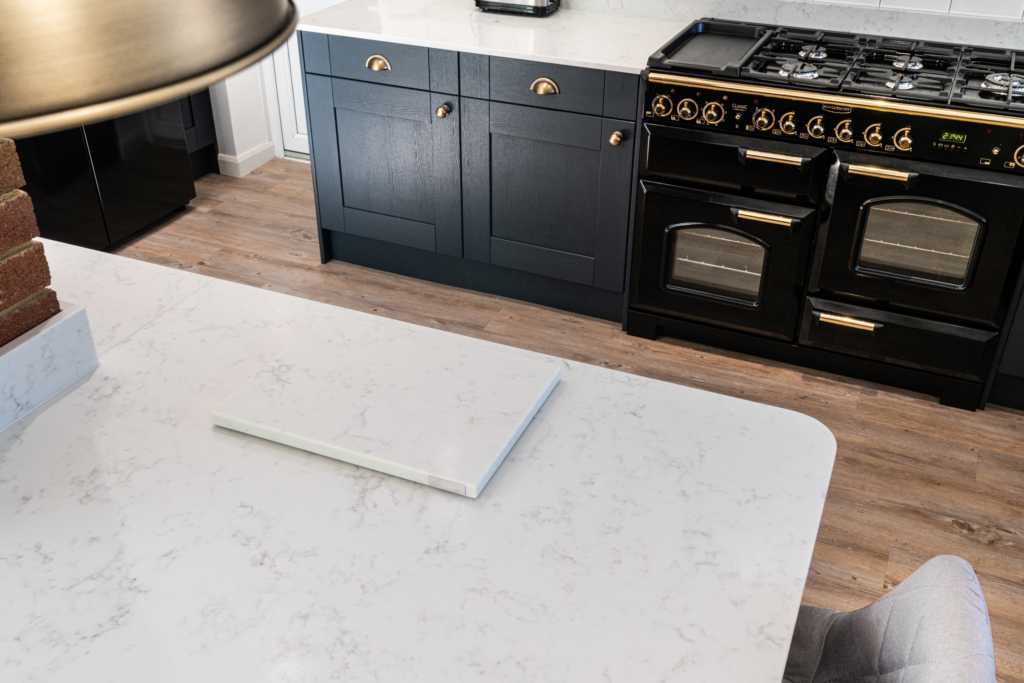
We installed and supplied the White Carrara quartz to a property in Harpenden. With the subtle marble markings, it has proved to be a wonderful finish to this hub of the home. Our client also opted for a worktop saver to sit beside the induction hob, this was made from an offcut from the worktops to protect them when removing hot pots and pans from the heated area.
Trivet and worktop saver FAQs
What is the difference between a trivet and a worktop saver?
A trivet lifts a hot dish clear of the surface on legs, creating an air gap. A worktop saver sits flat and works as both a heat mat and a preparation board. Trivets are better for very hot pans straight off the hob, savers are more versatile for everyday use.
Do you need a trivet on a quartz worktop?
Yes. Quartz contains polymer resin that is sensitive to heat, and a pan taken directly from the hob or oven can cause discolouration or, in the worst case, thermal shock cracking. A trivet is not optional on quartz, it is the single easiest way to protect your investment.
Do you need a trivet on granite or sintered stone?
Much less so. Granite is heat resistant, though sudden extreme temperature change can rarely cause thermal shock, so a trivet remains sensible. Sintered stone such as Dekton genuinely takes hot pans directly and needs no protection, which is one of its main advantages.
Can you get a worktop saver made from your own worktop?
Yes, and it is one of the most popular things we do. We cut savers from the offcut of your own slab, so the piece matches your worktop exactly. Ask us at templating, as it costs very little when the material is already there.
What is the best material for a trivet?
Cork and wood insulate well and will not scratch. Cast iron and metal are extremely durable but can mark a polished surface if dragged, so check they have felt or rubber feet. Stone savers look best alongside a stone worktop, particularly when cut from the same slab.
Where can I order a matching worktop saver?
Speak to us at our Welwyn showroom in Hertfordshire, or mention it when we template your worktop. We work with homeowners, designers and architects across Hertfordshire, including St Albans, Harpenden, Hertford and Hatfield, as well as North London and the wider South East.
Cawdor Stone Gallery are a division of the Cawdor Group, one of the UK’s leading natural stone providers. With 40 years of experience, our highly qualified team have undertaken international projects of all sizes, providing high-quality materials and a comprehensive range of stone-related services to a range of projects. Contact us today for more info on our quartz and granite worktops.